How to Detangle Hair Extensions Without Damaging Your Hair
A knot at the nape of the neck can turn a beautiful extension result into a stressful morning. The answer to how to detangle hair extensions is not to pull harder or add more product. It is to work with the hair’s direction, support the attachment points, and address the reason tangling started in the first place.
Natural hair extensions need thoughtful care because they move, rub against clothing, and absorb moisture differently from the hair growing from your scalp. With the right routine, most tangles can be released gently before they become a compacted knot.
Why Hair Extensions Tangle
A few loose tangles are normal, especially after sleep, a workout, a windy day, or time in humid weather. Hair at the nape is particularly prone to friction from collars, scarves, seatbacks, and movement. Longer lengths naturally have more opportunity to cross over one another.
Persistent tangling is different. It can point to dryness, product buildup, brushing only the surface layer, or an aftercare routine that is too aggressive around the attachment area. With bonded extensions, strands may also become caught close to the roots when natural shed hairs are not separated during regular brushing.
Hair quality and processing matter, too. Premium, carefully aligned natural hair has a smoother cuticle direction and is easier to maintain when it is properly moisturized. Still, even exceptional hair needs a consistent routine. No extension method is completely maintenance-free.
How to Detangle Hair Extensions Step by Step
The safest approach is slow, dry detangling before washing. Trying to force a brush through a wet knot can stretch the hair and make the tangle tighter.
How to Detangle Matted Hair Extensions Near the Roots
Hair extensions tangling at the roots require extra care because the knots may contain naturally shed hair trapped between attachment points. Unlike loose tangles through the lengths, compacted matting near bonds or wefts should not be pulled apart forcefully. If gentle finger separation does not release the strands, stop and arrange a professional assessment. Attempting to detangle tightly matted hair extensions at home can cause unnecessary tension on your natural hair and may damage the attachments.
Start with dry hair and the right brush
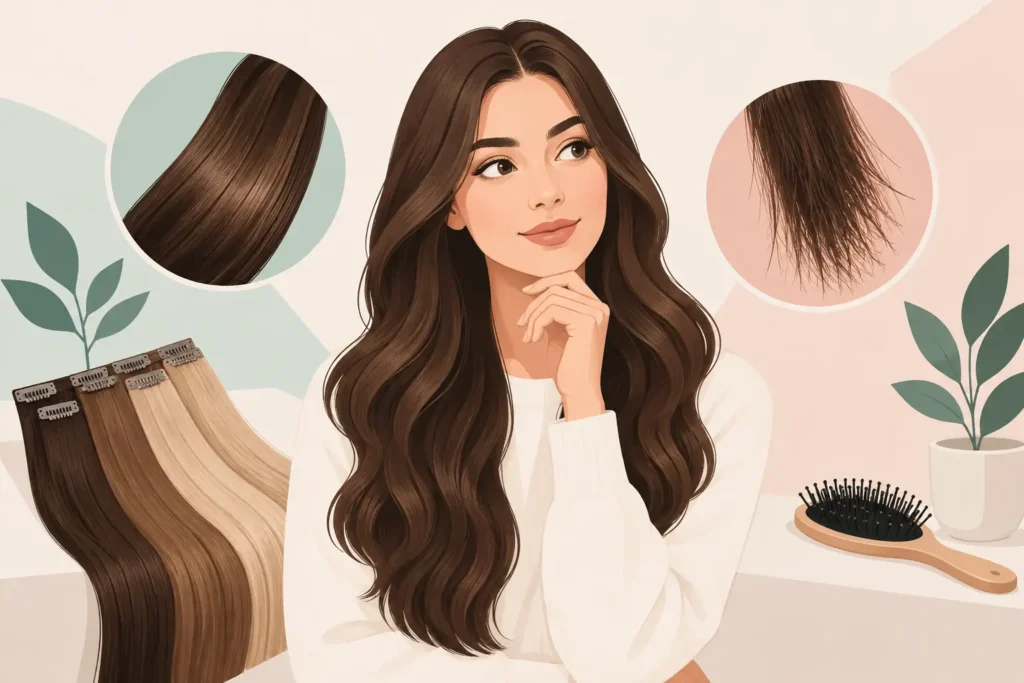
Choose a soft extension brush, a loop brush, or a wide-tooth comb designed to glide through lengths without catching at bonds, tapes, wefts, or clips. Avoid brushing with a small, rigid brush that pulls from the root. If the hair feels dry, apply a very small amount of lightweight leave-in conditioning mist or detangling product to the mid-lengths and ends only.
Do not saturate the attachment points. Oils, masks, and rich conditioners near keratin bonds or tape areas can affect their hold and encourage slipping.
Hold the roots before brushing
Gather one section at a time and hold it firmly just above the attachment area. This simple step protects your natural hair and prevents unnecessary tension on the extensions. Begin at the last few inches of the ends, brushing downward in short strokes.
Once the ends are smooth, move gradually upward. Continue working from ends to mid-lengths, then from mid-lengths toward the roots. Brushing from the top down immediately is one of the fastest ways to tighten a knot.
Separate a stubborn knot with your fingers
When you meet resistance, stop. Do not pull the brush through it. Use your fingertips to find the edges of the knot and gently tease apart a few strands at a time, beginning from the bottom. A little detangling mist on the knot can add slip, but use only enough to help the strands move.
If the knot is near a keratin bond, tape, seam, or weft, hold the area securely while you work below it. Never pick at an attachment with a comb tail, tweezers, or nails. This can damage the extension and place strain on your own hair.
Brush in sections, not only the top layer
Many people brush the visible top section and assume the hair is fully detangled. The underside, especially behind the ears and at the nape, is where knots quietly build. Divide the hair into two or more sections and check the inner layers with your fingers before bedtime and before washing.
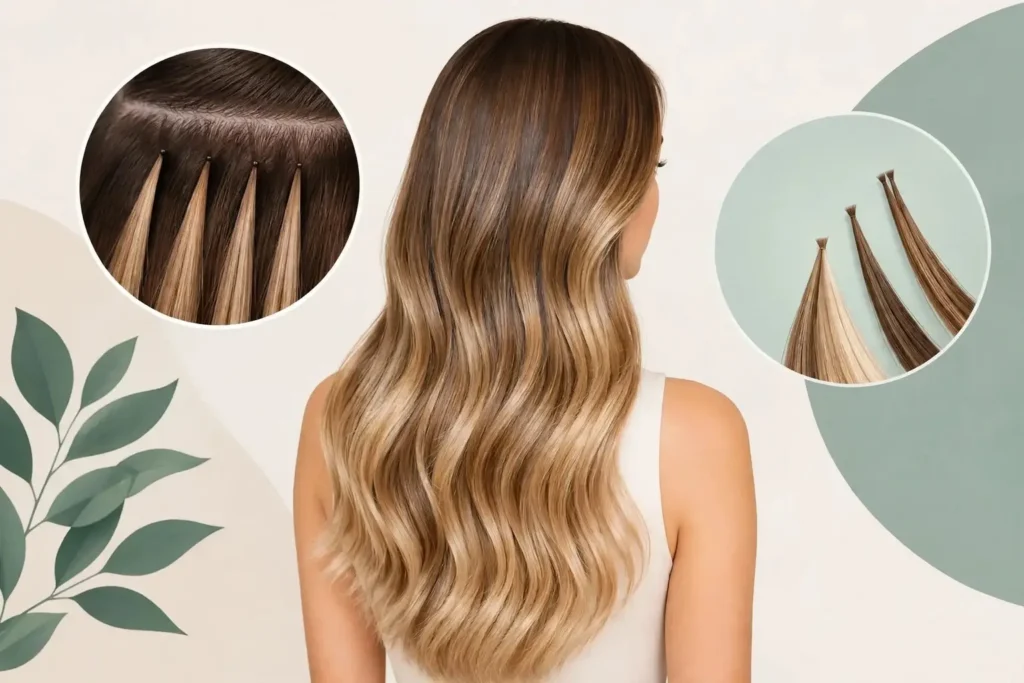
For keratin extensions, gently pass your fingers between the bonds to make sure shed hairs have not wrapped around neighboring strands. This should feel calm and controlled, never like pulling apart a tangle at the scalp.
Detangling Extensions After Washing
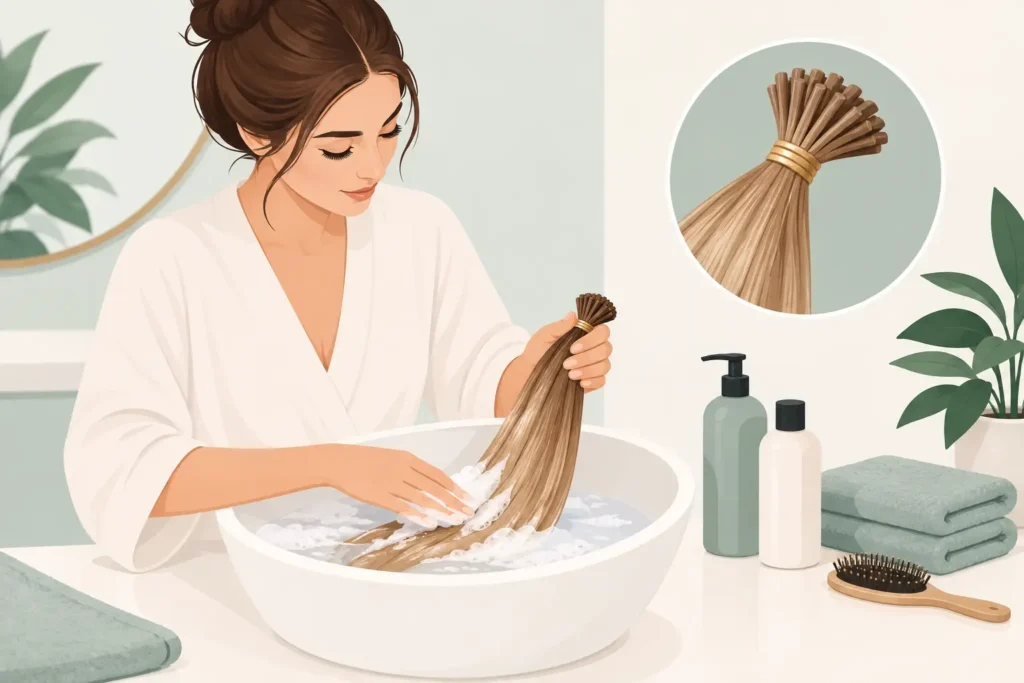
Extensions are more vulnerable when wet, so the washing technique matters as much as the brush you use afterward. Before showering, detangle your hair thoroughly while dry. This prevents loose strands from tightening into knots during cleansing.
Wash with your head upright rather than bending the hair forward. Let water run from roots to ends and smooth shampoo through the scalp without piling the lengths on top of your head. Rinse in the same downward direction.
Apply conditioner from the mid-lengths to the ends. Keep it away from bonds, tape tabs, and other attachment points unless your stylist has given method-specific instructions. After rinsing, gently press out water with a soft towel. Do not rub or twist the hair.
Allow the hair to become damp rather than dripping wet, then apply a lightweight leave-in product to the lengths if needed. Support the roots and use a wide-tooth comb or extension brush from the ends upward. If your extensions are very long or have a wave pattern, separate them into smaller sections first.
Dry the roots and attachment area completely. Sleeping with damp extensions can create tangling and leave the root area uncomfortable. A blow-dryer on a moderate setting, directed downward, helps keep the hair smooth while protecting the installation.
Habits That Prevent Knots Before They Start
Detangling should be a brief daily ritual, not an emergency repair. Brush two to three times a day: in the morning, after activity if needed, and before bed. Always support the roots and work upward from the ends.
At night, loosely braid the lengths or place them in a low, soft ponytail. The goal is to reduce friction, not create tension. A smooth pillowcase can also help minimize rubbing, particularly for longer hair.
After swimming, rinse the hair promptly with fresh water and detangle gently once it has been conditioned and partially dried. Saltwater and pool chemicals can leave natural hair feeling dry, so a careful post-swim routine is worthwhile.
Be selective with styling products. Heavy oils, waxy sprays, and products that leave a sticky finish can make strands cling together. Use heat protection before hot tools, and avoid repeatedly styling the same area close to the attachments. Smooth, hydrated lengths are less likely to catch and tangle.
When Tangling Needs a Stylist’s Attention
A small knot in the ends is usually manageable at home. However, a tight mat close to the scalp, repeated tangling around the same bonds, visible slipping, or discomfort should be checked by a qualified extension stylist. Trying to remove a root-level tangle alone can pull on your natural hair and compromise the installation.
This is also the right time to review the fit of the extensions, your brushing technique, and the products in your routine. Sometimes the solution is as simple as adjusting where conditioner is applied or adding a more thorough nape check. In other cases, extensions may need maintenance or removal based on their method and wear period.
At NICEHAIR, aftercare is treated as part of the result, not an afterthought. A precise installation, properly matched hair, and clear home-care guidance all help the lengths stay soft, natural-looking, and comfortable between salon visits.
The safest way to manage tangled hair extensions is to address small knots before they turn into compacted matting. If your extensions are tangling near the roots, pulling uncomfortably, or becoming difficult to brush, professional guidance can help you decide what to do next. At NICE HAIR Dubai, you can send a photo to our specialists on WhatsApp for advice on whether maintenance or an in-person assessment is needed.
Frequently Asked Questions About Detangling Hair Extensions
Can you detangle severely matted hair extensions at home?
Small, loose tangles can often be gently removed at home, but severely matted hair extensions require professional attention. Dense knots near keratin bonds, tape attachments, or wefts may contain naturally shed hair trapped around the roots. Pulling or cutting these knots yourself can damage your natural hair. If gentle finger separation does not help, contact an extension specialist.
Should you detangle hair extensions when wet or dry?
It is generally best to remove loose tangles before washing, while the hair is dry. Wet hair is more vulnerable to stretching and breakage, especially when brushed aggressively. After washing, allow the extensions to become damp rather than dripping wet, then gently detangle the lengths in small sections using an appropriate extension brush or wide-tooth comb, following your stylist’s recommendations.
Why do hair extensions keep tangling at the roots?
Hair extensions tangling at the roots can result from naturally shed hairs becoming trapped between attachment points, insufficient separation, product buildup, or delayed maintenance. As natural hair grows, bonds may move farther from the scalp, increasing the possibility of neighboring strands crossing. Regular gentle separation and professional maintenance can help prevent compacted matting.
What is the best brush for detangling hair extensions?
The best brush depends on the extension method and hair texture. Soft extension brushes, loop brushes, and suitable detangling brushes are commonly used to work through the lengths without catching attachment points. Always support the hair near the roots and begin brushing at the ends. Avoid forcing a brush through knots or dragging it directly across bonds or tape tabs.
How can you prevent hair extensions from tangling while sleeping?
To help prevent overnight tangling, make sure your extensions and attachment areas are completely dry before bed. Gently brush the lengths and secure them in a loose braid or low ponytail using a soft hair tie. A silk or satin pillowcase may also reduce friction. Avoid tight hairstyles that pull on the roots or place tension on extension bonds.
Certified hair extension stylists with 14+ years of experience. Own production of virgin Slavic hair, 10,000+ bundles in stock, salon in Dubai. Specialization: keratin extensions, ethical sourcing Russia & CIS, cold color technology.