A beautiful hair extension result is rarely decided by length alone. It comes down to whether the hair moves like your own, accepts styling without becoming dry, and still looks polished after weeks of everyday wear. That is why the search for the best virgin Slavic hair should begin with more than a shade chart or a low price.
True premium hair has a story that can be explained clearly: where it was sourced, how it was sorted, what processing it received, and how it was made into the final extension format. Those details are what separate a naturally convincing result from hair that looks perfect only on the first day.
What “virgin Slavic hair” should mean
Virgin hair is generally understood as hair that has not been chemically colored, lightened, permed, or relaxed before collection. It preserves its natural cuticle, pigment, and texture. Slavic hair refers to hair sourced from Russia and countries in Eastern Europe and the CIS, valued for its naturally fine-to-medium structure, soft feel, and range of natural shades.
Still, these terms are not a universal legal grade. A label alone cannot guarantee that every bundle is unprocessed, ethically sourced, or cuticle-aligned. The best suppliers can explain their sourcing standards and the work completed after collection without vague promises.
For many clients, virgin Slavic hair is especially desirable because it blends naturally with finer hair types. It tends to have a light, airy movement rather than the dense, heavy appearance that can make extensions visible at the roots. But “best” is never one texture for everyone. The right choice depends on your natural density, porosity, styling habits, and the result you want.
The qualities of the best virgin Slavic hair
Cuticle alignment comes first
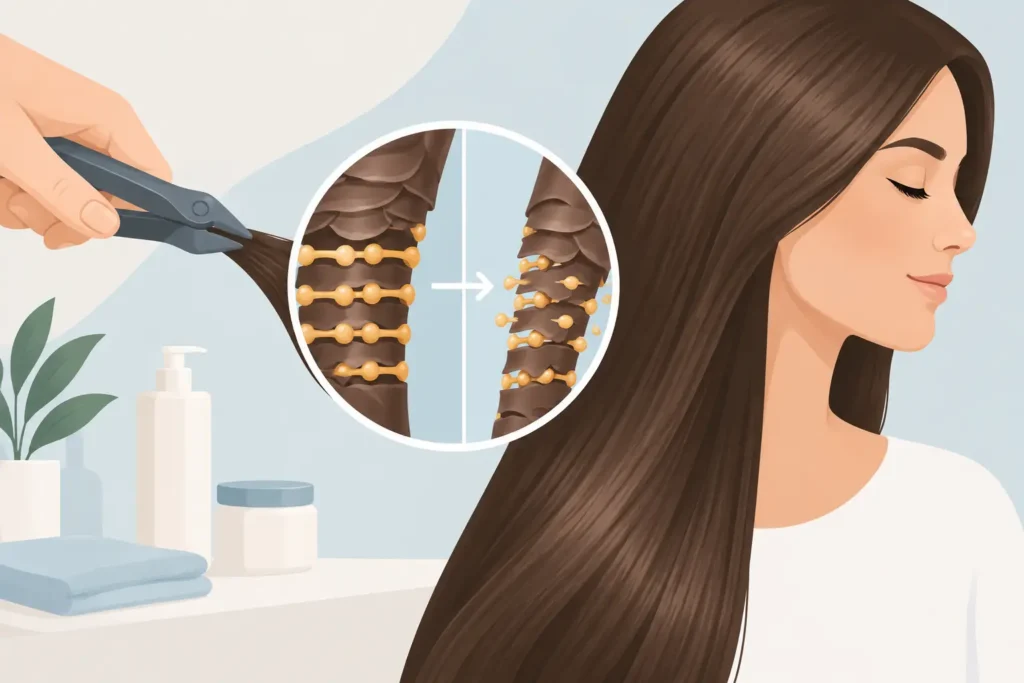
Every strand has an outer cuticle layer. When hairs are collected and kept in the same root-to-tip direction, the cuticles remain aligned. The result is smoother movement, less friction between strands, and better resistance to tangling.
Hair that has been mixed in different directions may be coated heavily with silicone to create temporary shine. At first, it can feel remarkably soft. After several washes, that coating fades and the strands may become rough, knotty, or difficult to brush.
Minimal processing protects the hair’s character
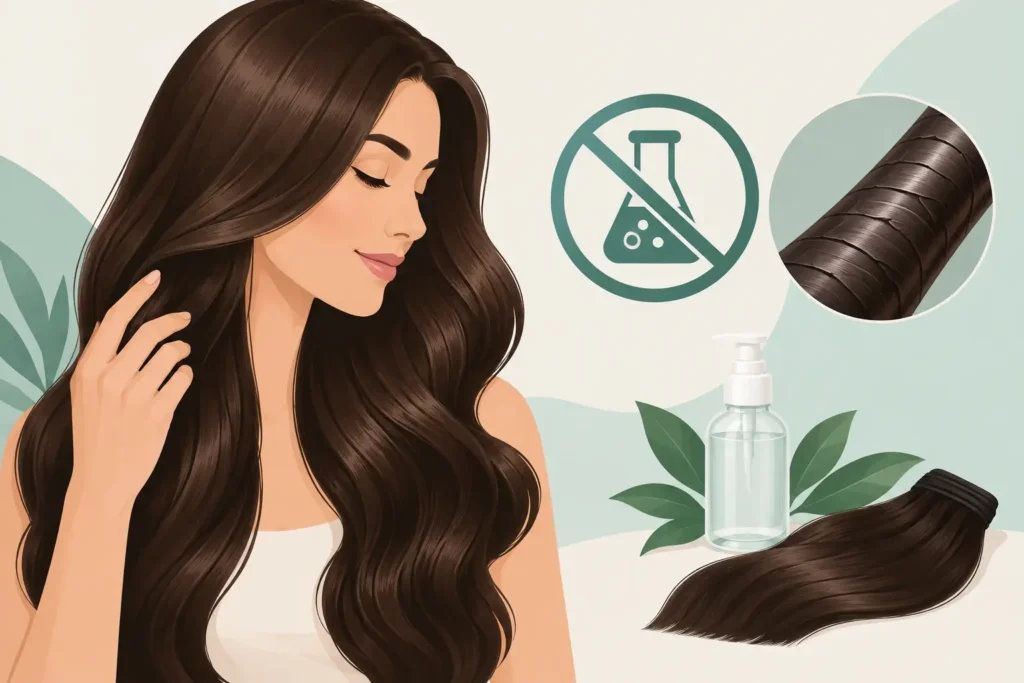
Natural hair is not always the exact color a client wants. Responsible production can include careful color work, but the method and degree of processing make a real difference.
The best virgin Slavic hair should retain elasticity after washing and heat styling. It should not feel overly silky in a slippery, artificial way, nor should it become stiff after the first few shampoos. Cold color technology is a gentler approach for creating custom shades while respecting the condition of the fiber.
Very light blonde hair has usually undergone more color work than untouched darker shades. That does not automatically mean it is poor quality. It means it needs realistic expectations, thoughtful care, and a supplier with strong quality control.
Natural variation is a good sign
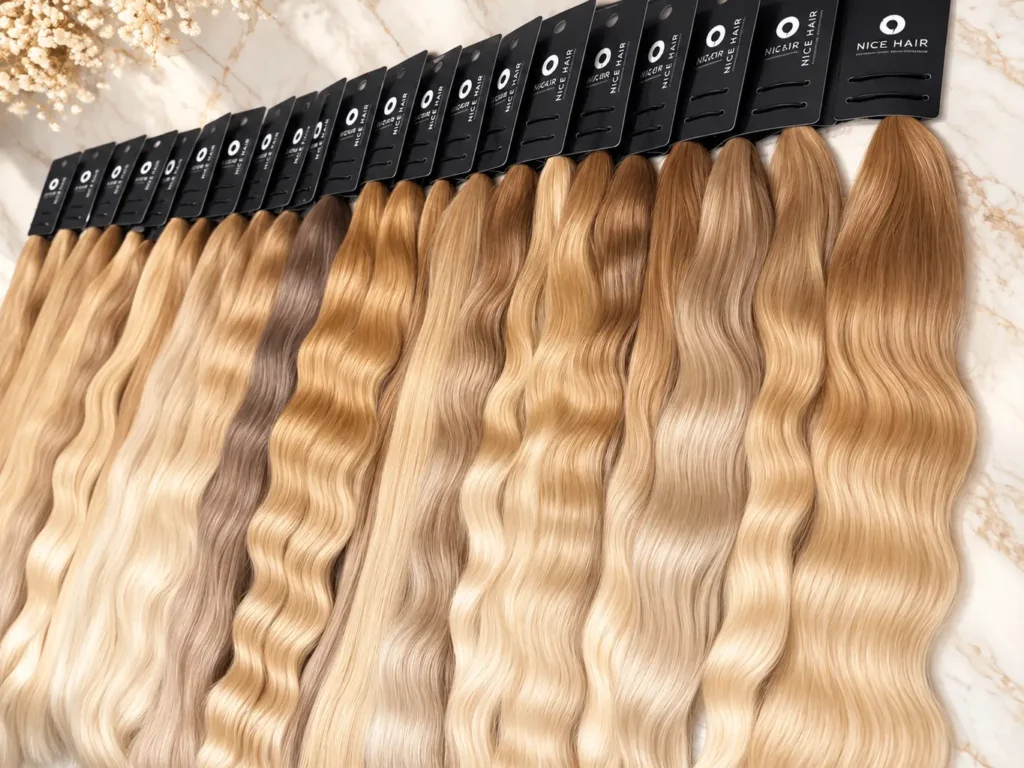
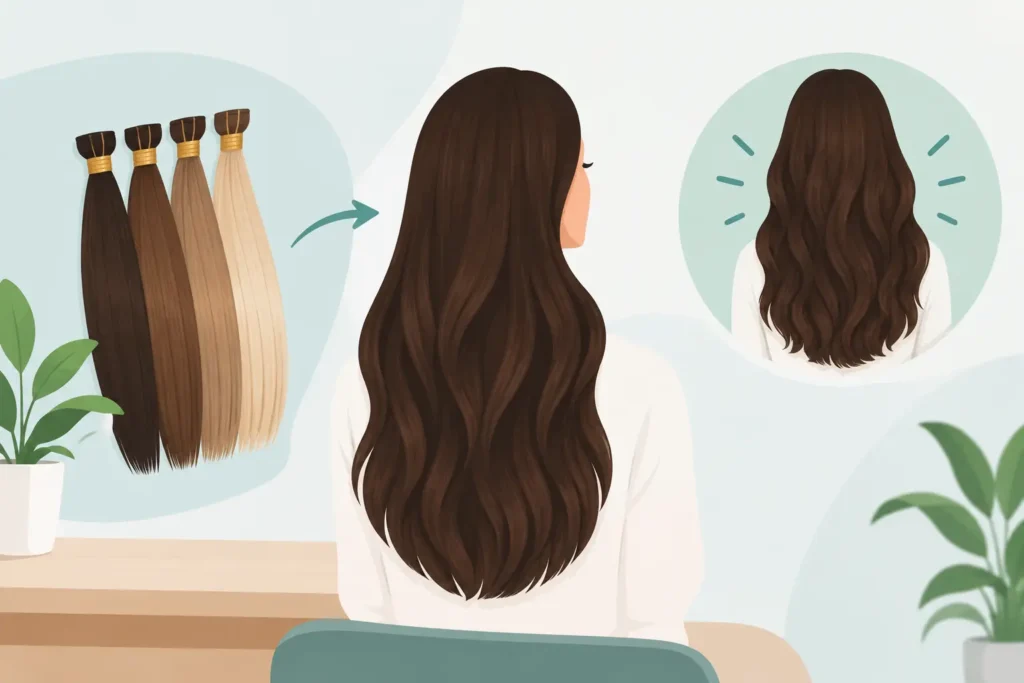
Premium hair should not look unnaturally uniform. Real hair has subtle variation in tone, strand thickness, and texture. These nuances help extensions disappear into your own hair, especially in daylight and on camera.
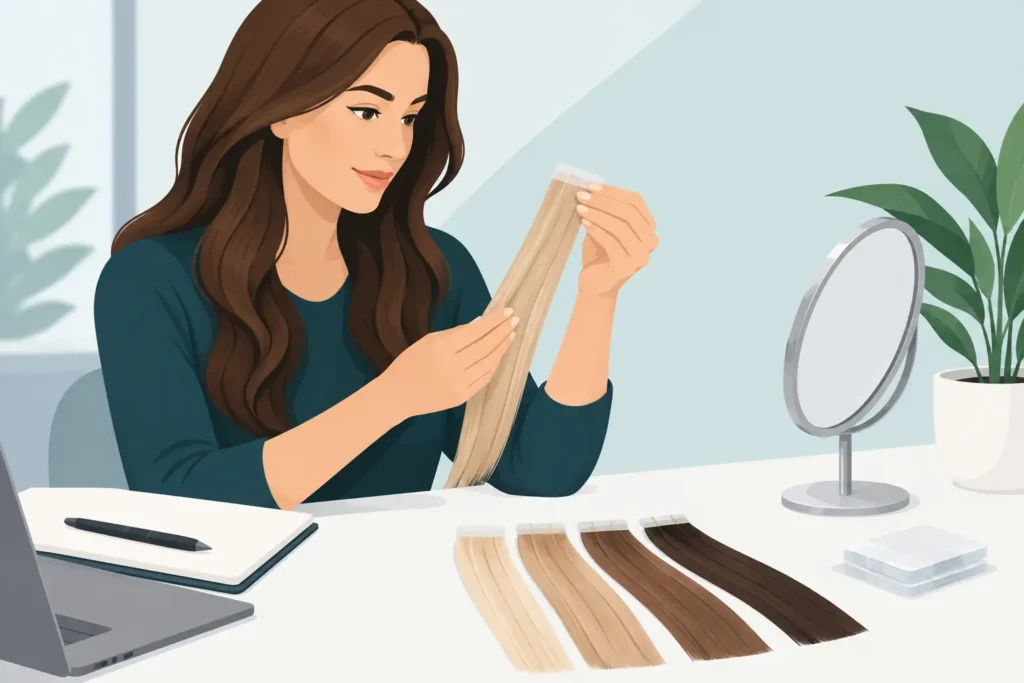
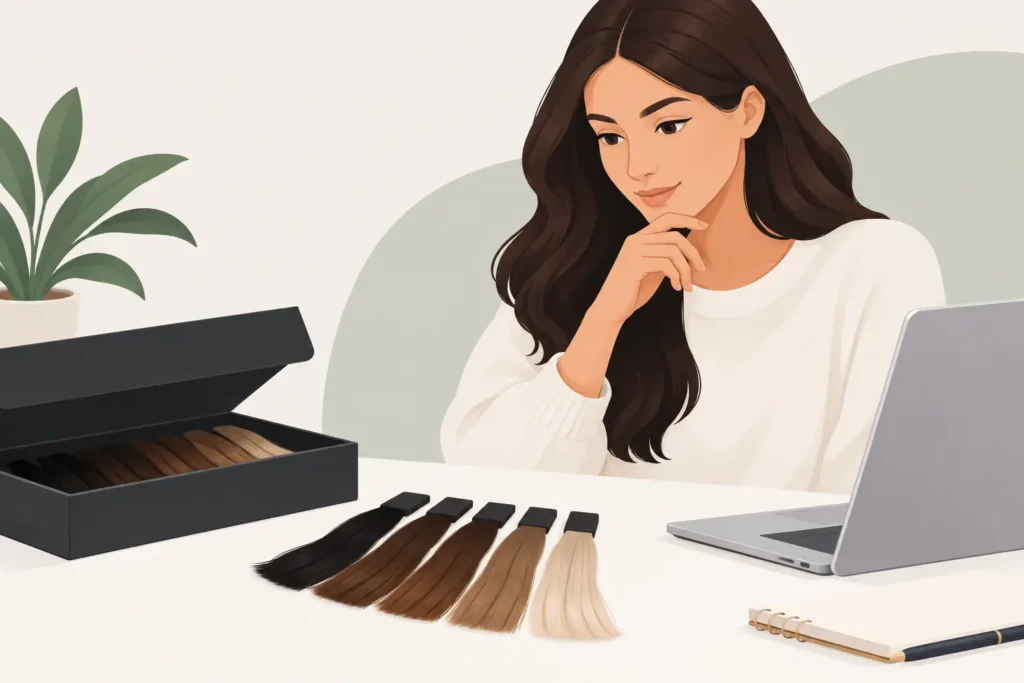
A skilled stylist does not simply choose “brown” or “blonde.” They evaluate the warmth at your roots, the dimension through your lengths, and how your hair behaves after air-drying.
Origin and traceability are part of quality
The phrase “Slavic hair” is often used broadly in the hair market. For a client or professional buyer, transparency is the safeguard. Ask whether the supplier controls the sourcing process, whether hair is selected by hand, and whether batches are sorted before they are made into extensions.
Ethical sourcing is not an abstract marketing point. It affects consistency. When a manufacturer works directly with raw hair and oversees selection, it can sort strands by length, color, and texture instead of relying on a mixed batch with unpredictable behavior. This level of control also allows more accurate matching from one order to the next.
At NICEHAIR, the production chain is monitored from ethical raw-hair selection in Russia and CIS countries through handmaking, color work, and the final application. With more than 10,000 hair cuts in stock and 14 years of experience, the team can select hair for the person and the method rather than forcing every client into the same limited inventory.
Match the hair to the extension method
Even exceptional hair can underperform when the format is wrong for the client.
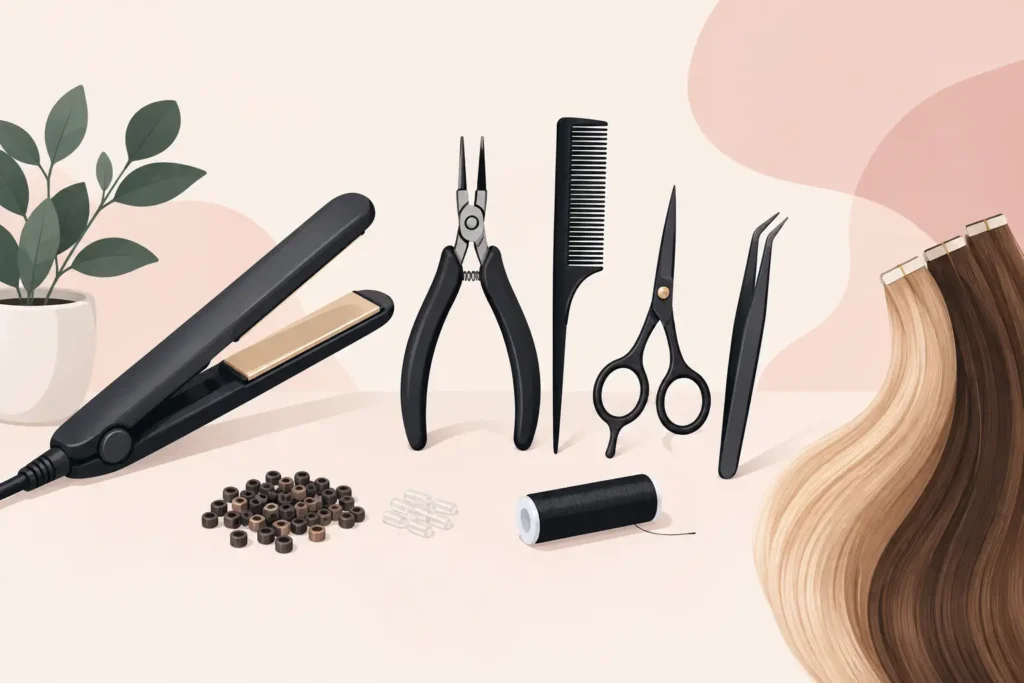
Keratin extensions are an excellent choice when you want maximum freedom in placement, movement, and density control. Small bonds can be customized across the head. The quality of the capsule matters as much as the hair itself: it should be secure, discreet, and appropriate for the strength of your own strands.
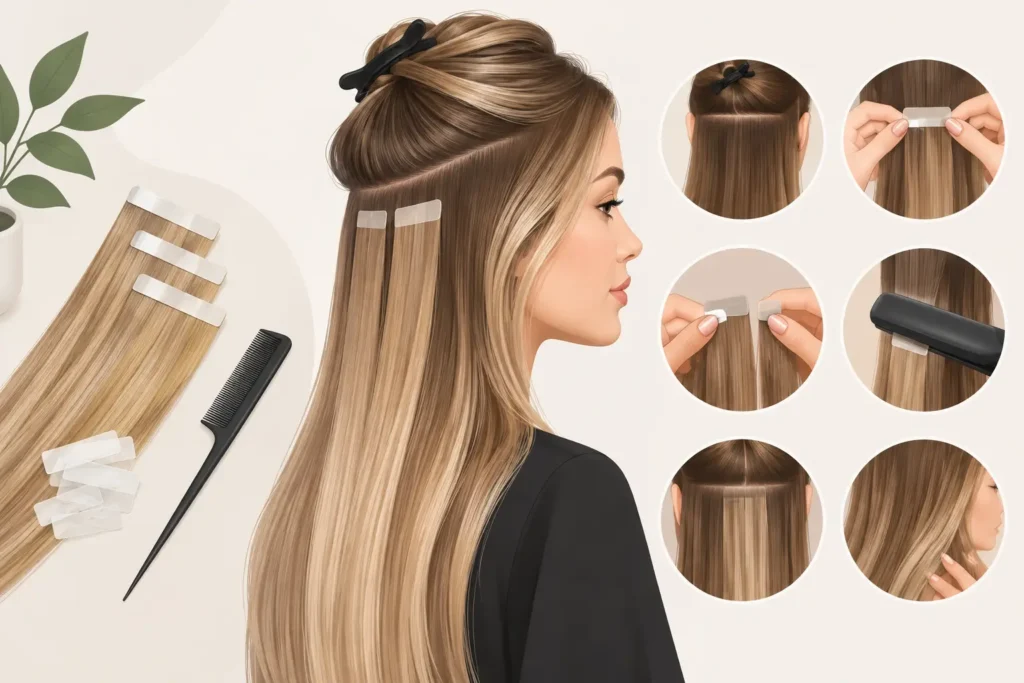
Wefts can work beautifully for clients with medium to thick hair who want efficient volume and length. Tape-ins offer a flatter application and can be useful for certain hair patterns, but placement must be precise. For clip-ins and handmade hairpieces, the priority shifts toward comfortable construction and balanced weight.
A consultation should include more than choosing a length. Your stylist should assess your natural hair, lifestyle, previous color history, and willingness to follow aftercare.
How to assess hair before you buy
If you are ordering hair online or buying for professional use, request clear information rather than relying solely on polished photos. Ask whether the hair is virgin at collection, whether it is remy and cuticle-aligned, how it has been colored, and which extension formats are available.
Look closely at the ends. Premium hair should have enough fullness through the length for the selected format. Excessively thin ends can make a long installation look stringy, even when the root area appears dense.
For salons and extension artists, consistency is often the deciding factor. One beautiful bundle is not enough. You need predictable quality across shades, lengths, and repeat orders, along with access to formats that fit your work. A supplier that owns its production can usually offer stronger control over these variables than a reseller.
Care determines how long premium hair stays premium
Virgin Slavic hair is durable, but it is still hair that no longer receives nourishment from the scalp. Use a gentle, sulfate-free shampoo, condition the mid-lengths and ends, and brush carefully from the ends upward with an extension-safe brush. Dry the attachment area thoroughly after washing and avoid applying oils, masks, or heavy conditioners directly onto bonds or tapes.
Heat styling is possible, but moderate temperatures and heat protection preserve softness far better than daily high-heat tools. Sleep with hair in a loose braid or low ponytail to reduce friction.
The right hair should make your routine feel more polished, not more complicated. Choose a supplier and stylist who can explain exactly what you are receiving, why it suits your hair, and how to care for it with confidence.

Certified hair extension stylists with 14+ years of experience. Own production of virgin Slavic hair, 10,000+ bundles in stock, salon in Dubai. Specialization: keratin extensions, ethical sourcing Russia & CIS, cold color technology.