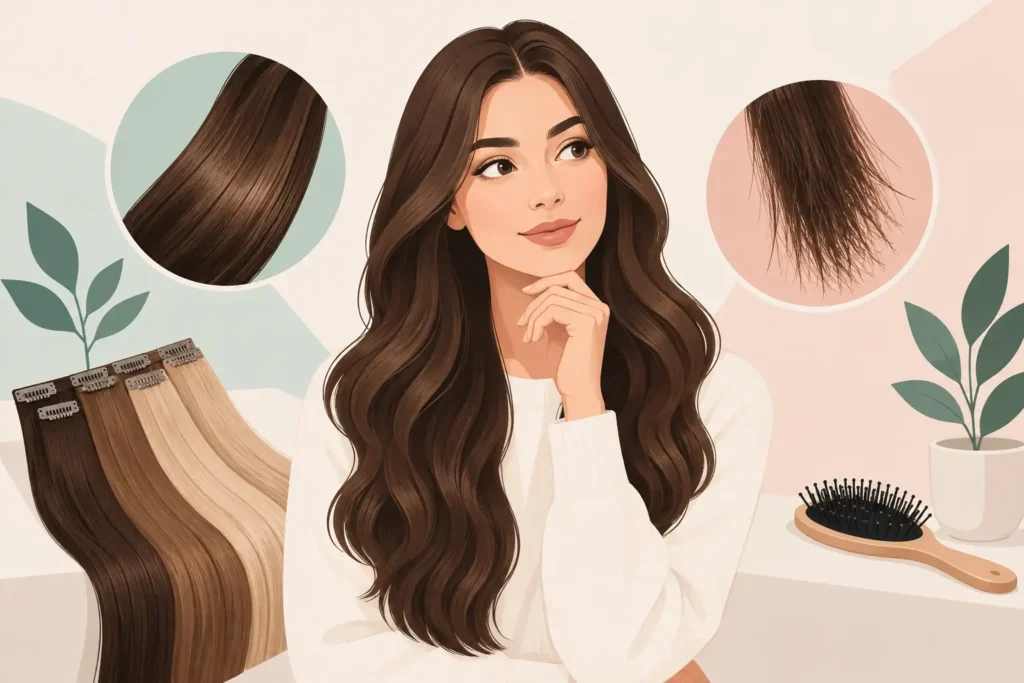
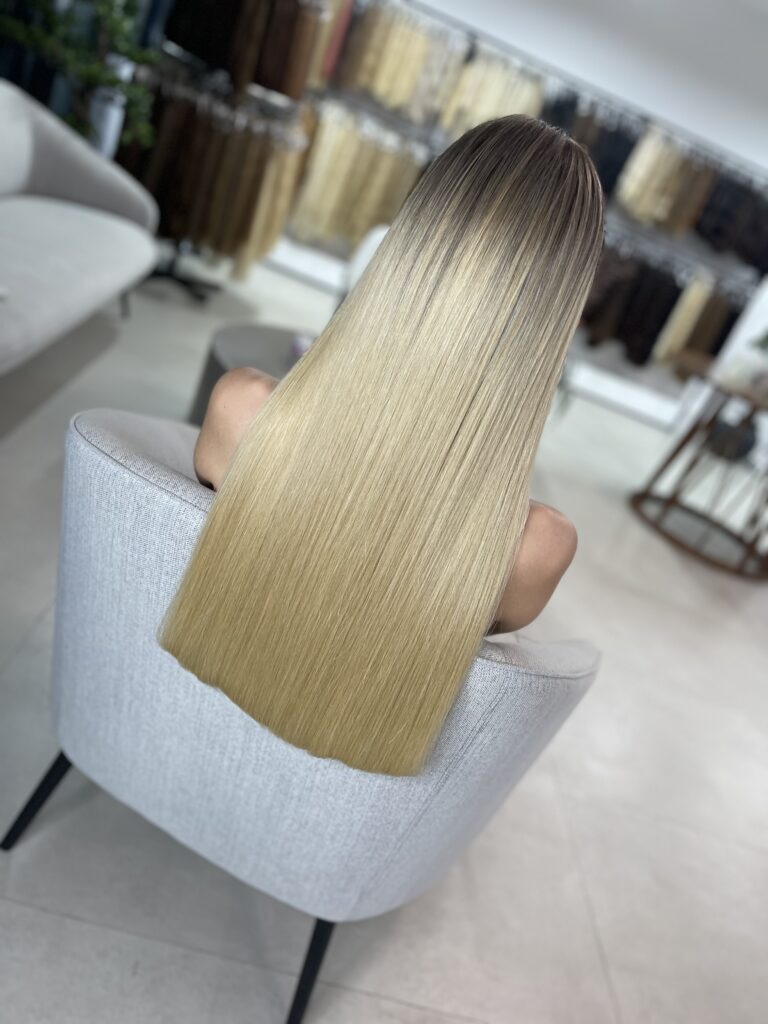
Bleached hair requires a specialized care routine because the lightening process alters the hair structure. During bleaching, the cuticle is lifted and natural pigments are removed, making hair more porous, fragile, and prone to moisture loss. Without proper maintenance, blonde hair can quickly become dry, brittle, and dull.
This guide explains how to care for bleached hair, minimize breakage, maintain hydration, and keep your blonde color looking healthy and vibrant.
Why Bleached Hair Needs Special Care
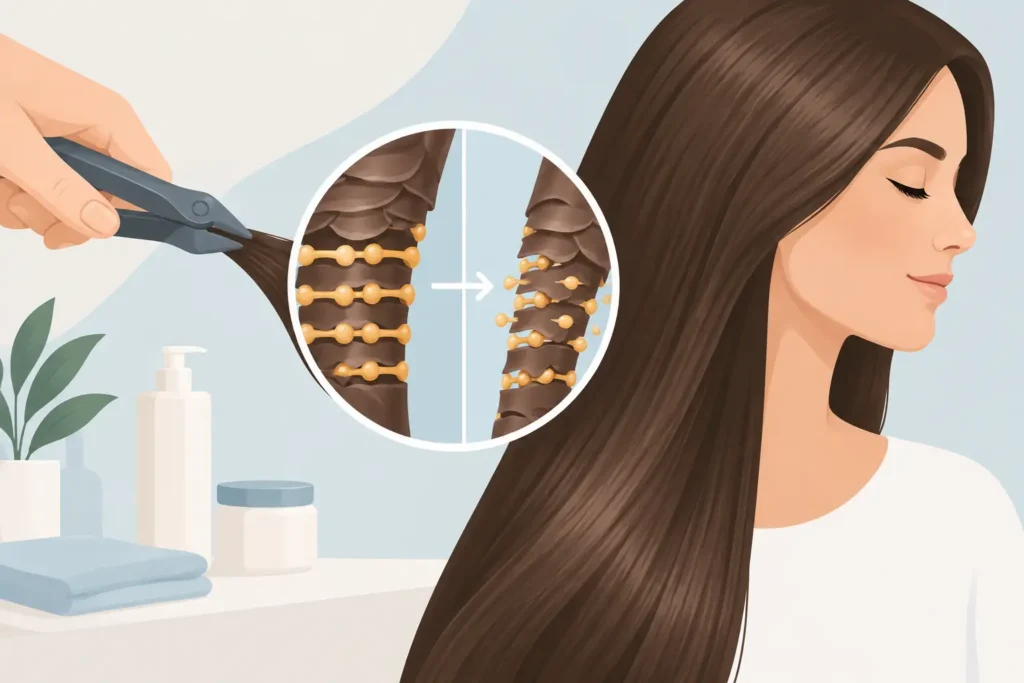
Hair bleaching is one of the most aggressive chemical processes in hairdressing. It weakens the protective cuticle layer, reducing the hair’s ability to retain moisture and proteins. As a result, bleached hair often experiences:
- Increased porosity
- Dryness and dehydration
- Split ends and breakage
- Reduced elasticity
- Heat sensitivity
- Loss of shine
A successful hair care routine focuses on restoring moisture, strengthening the hair fiber, and protecting the cuticle from further damage.
Prevent Hair Breakage and Split Ends
One of the most common issues with bleached hair is breakage, especially at the ends. Excessive heat styling and improper handling can significantly worsen damage.
Best Practices for Preventing Breakage
- Use a blow dryer on a cool or low-heat setting whenever possible.
- Keep flat iron and curling iron temperatures below 180°C (356°F).
- Finish blow-drying with a cool airflow to help close the cuticle and reduce thermal shock.
- Always apply a heat protectant before using any hot tools.
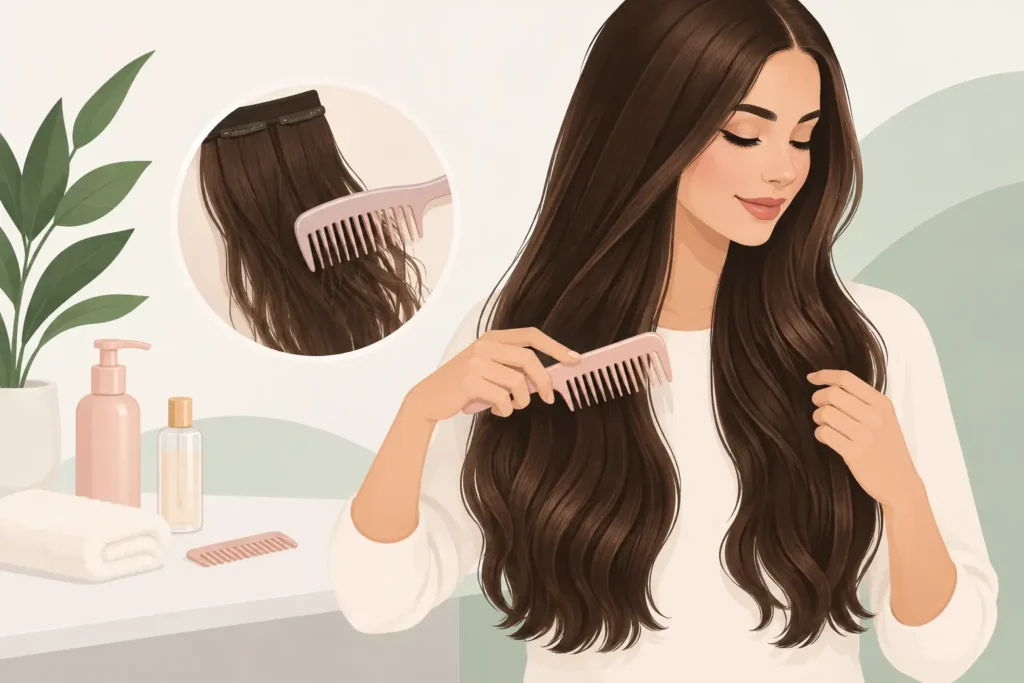
- Avoid rubbing hair with a towel, which can damage the cuticle.
- Never brush wet hair aggressively, as wet strands are more elastic and vulnerable to breakage.
Heat protection is not optional for blonde hair. It acts as a barrier between the hair fiber and high temperatures, helping reduce protein loss and structural damage.
Restore Moisture and Nutrition
Bleached hair loses moisture much faster than virgin hair because the cuticle becomes more porous after chemical processing. Maintaining hydration is essential for softness, elasticity, and shine.
How to Hydrate Bleached Hair
Use products formulated for intensive moisture retention, including:
- Deep conditioning masks
- Leave-in conditioners
- Hydrating serums
- Moisture-rich hair sprays
Focus application on the mid-lengths and ends rather than the roots.
Understanding Hair Porosity
Hair porosity refers to the hair’s ability to absorb and retain moisture. Since bleaching raises the cuticle, porosity typically increases after lightening treatments.
The higher the porosity, the faster moisture escapes from the hair shaft.
Low Porosity Hair
Low porosity hair has a tightly closed cuticle that resists moisture absorption. Recommended care:
- Lightweight moisturizing products
- Protein-enriched treatments
- Warmed hair masks for better penetration
Medium Porosity Hair
Medium porosity hair absorbs and retains moisture efficiently. Recommended care:
- Balanced hydration and nourishment
- Products containing oils and keratin
- Consistent conditioning routine
Hair oils should be applied only to the lower third of the hair, never directly to the scalp.
High Porosity Hair
Most heavily bleached hair falls into this category. Characteristics:
- Rapid moisture absorption
- Fast moisture loss
- Increased dryness and frizz
- Greater susceptibility to damage
Recommended care:
- Deep conditioning masks 2–3 times per week
- Consistent use of heat protectants
- Low-temperature styling
- Moisture-sealing leave-in treatments
High-porosity blonde hair requires a structured maintenance routine to prevent ongoing deterioration.
Proper Hair Oil Usage
Hair oils can significantly improve the appearance and condition of bleached hair when used correctly.
When to Apply Hair Oil
Apply oils after blow-drying or heat styling rather than before.
Applying oil before heat exposure may create a film on the hair surface that can increase internal heat buildup and contribute to further damage.
Focus application on:
- Mid-lengths
- Ends
- Dry or damaged areas
Avoid applying oils directly to the roots unless the product is specifically formulated for scalp use.
Common Mistakes That Damage Bleached Hair
Many people unknowingly accelerate damage through improper care.
Avoid these mistakes:
- Using heat tools above 180°C (356°F)
- Skipping heat protection
- Overwashing
- Brushing wet hair aggressively
- Using drying shampoos
- Neglecting deep conditioning treatments
- Delaying trims for extended periods
Professional Bleached Hair Care Routine
| DAILY | Apply leave-in conditioner. Use heat protection before styling. Protect hair from excessive heat exposure. |
| WEEKLY | Use a deep moisturizing mask 2–3 times. Apply a nourishing treatment or serum. Assess hair elasticity and hydration levels. |
| MONTHLY | Evaluate porosity changes. Adjust products according to hair condition. Trim damaged ends if necessary. |
Conclusion
Bleached hair can remain healthy, strong, and shiny when supported by a targeted care routine. The key priorities are moisture retention, heat protection, porosity management, and regular maintenance. By combining deep hydration, gentle handling, and proper styling techniques, you can significantly reduce breakage and preserve both the appearance and integrity of blonde hair for the long term.

Certified hair extension stylists with 14+ years of experience. Own production of virgin Slavic hair, 10,000+ bundles in stock, salon in Dubai. Specialization: keratin extensions, ethical sourcing Russia & CIS, cold color technology.