Best Hair Extension Tools: A Professional Kit Guide
A beautiful extension result is decided long before the final blend and styling. It begins with control: clean sectioning, correctly formed bonds, measured heat, and a removal process that respects the client’s natural hair. The best hair extension tools are not simply the most expensive items in a kit. They are the tools that allow a trained professional to work accurately, consistently, and comfortably across every appointment.
For clients, this distinction matters because invisible bonds and healthy-looking movement depend on technical details they may never see. For extension artists, the right tools reduce strain, protect workflow, and make quality repeatable from one application to the next.
What Makes Hair Extension Tools Worth Choosing Carefully
Tools should match the extension method, hair texture, and artist’s technique. A tool that feels excellent for fine keratin bonds may be unsuitable for larger pre-bonded sections. Likewise, a comb that creates clean parts on a dense, textured base may be too wide for detailed work around the hairline.
The goal is never to collect every tool available. A focused professional kit should help achieve three things: accurate placement, secure yet flexible attachment, and controlled maintenance or removal. If a tool compromises any of these, it can affect both the appearance of the extensions and the comfort of the natural hair.
At NICEHAIR, production, color work, and salon application are considered as one quality system. That perspective is useful when selecting tools: every step should support the condition and behavior of the hair, not just speed up the appointment.
Best Hair Extension Tools for Keratin Applications
A temperature-controlled fusion iron
For hot keratin extensions, a compact fusion iron with stable, adjustable temperature control is the center of the kit. The purpose is to soften the keratin evenly, not to overheat it. Inconsistent heat can leave a bond too bulky, too stiff, or difficult to roll into a refined shape.
Choose a tool with narrow, smooth plates that can access close-to-root sections without catching surrounding hairs. It should heat consistently throughout a full appointment and sit comfortably in the hand. The right setting depends on the keratin formulation and the artist’s method, so a higher temperature is not automatically better. Precision is what creates a small, discreet bond.
A tail comb made for clean sectioning
A professional tail comb is deceptively important. The pointed tail should create crisp, controlled sections without pulling or snagging, while the teeth should glide through hair cleanly. Uneven sections can place too much tension on one area or make the row pattern visible when the client wears a ponytail or changes her part.
For detailed installation, keep one comb exclusively for sectioning and another for smoothing. This prevents product residue from transferring onto clean hair before application. A fresh, tidy working area also makes it easier to see whether each bond is positioned at a safe distance from the scalp.
Sectioning clips with a firm, gentle hold
Sectioning clips must keep hair out of the way without denting it, slipping, or pulling at the roots. Flat clips are especially useful around the crown and nape, where clean isolation determines whether keratin bonds remain hidden in natural movement.
Avoid overloading a single clip with too much hair. Several smaller sections are easier to manage and reduce the chance that loose hairs will enter a bond during application. This sounds minor, but stray hairs caught in a bond can make removal more complicated later.
Heat shields and protective finger guards
Heat shields and protective finger guards can provide additional protection during hot keratin applications, helping specialists isolate working strands and reduce the risk of accidental contact with heated surfaces. They protect both the professional and the client while allowing the bond to be rolled and shaped closely. A well-designed shield also helps isolate the working strand from nearby hair, keeping the attachment clean.
These accessories do not replace proper technique. They support it. The artist still needs to monitor the amount of keratin, the time under heat, and the flexibility of the finished bond. When all three are correct, the attachment should feel secure without looking oversized.
Bond-forming tools for a consistent finish
Keratin bonds are often refined with shaping tools designed to create a uniform, compact finish. Depending on the preferred technique, an artist may use a roller, flat shaping surface, or small pliers made for bond work. The best choice is the one that allows gentle, repeatable pressure rather than crushing the keratin.
Consistency matters more than a particular bond shape. Every attachment should be proportionate to the client’s natural strand density. Fine hair generally requires smaller, lighter sections, while fuller natural hair may support a different distribution. This is why a professional consultation should come before any tool or method is selected.
Choosing reliable professional hair extension tools can make a noticeable difference in the precision and consistency of keratin applications. NICE HAIR offers specialized equipment and accessories for extension artists, including hot fusion tools and products for professional removal. If you’re building or upgrading your working kit, you can explore the NICE HAIR professional tools collection and choose equipment suited to your technique.
Tools That Protect the Removal Process
Application gets attention because it is visible immediately. Removal deserves the same standard of care. Extensions should be removed with purpose, patience, and tools designed for the attachment type.
Professional bond remover
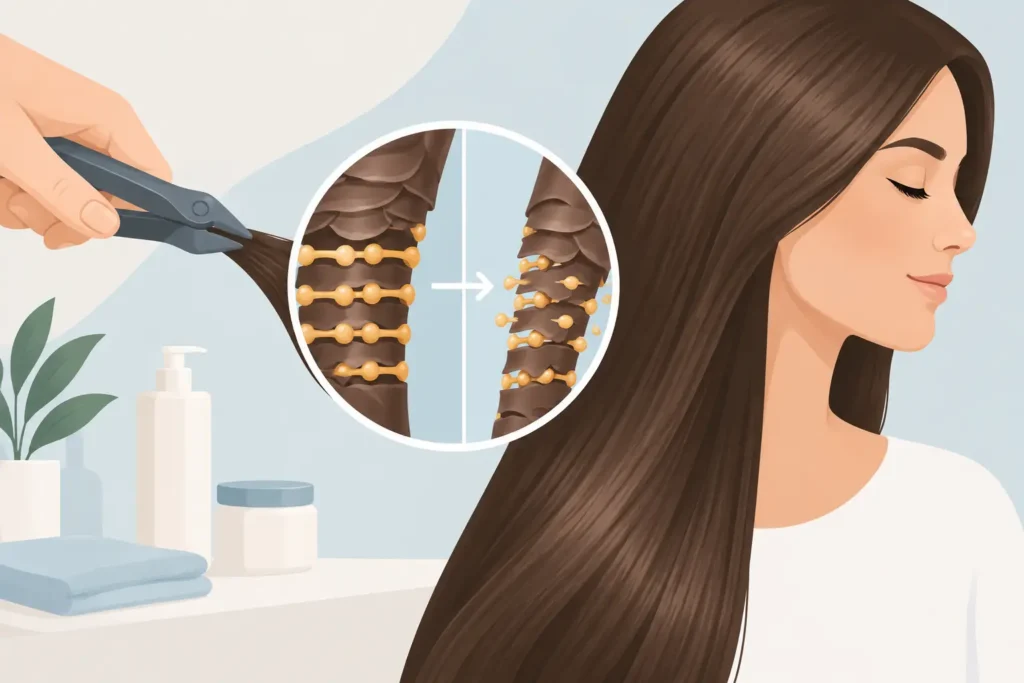
A professional keratin bond remover should be compatible with the specific bonding material and used according to the manufacturer’s instructions. Combined with appropriate removal tools, it helps release attachments with controlled handling and minimal unnecessary pulling. The product should be applied precisely to the bond, allowed to work as directed, and followed by gentle mechanical separation. Rushing this step can cause unnecessary stress to natural hair.
The exact remover should always correspond with the bond formulation. Artists who work with multiple product systems should label and organize their removers carefully rather than relying on a one-size-fits-all approach.
Removal pliers with controlled pressure
Removal pliers should have a comfortable grip and a jaw shape that breaks down the bond gradually. They are not meant to tug extensions away from the hair. Instead, they help the remover penetrate and loosen the keratin through measured compression.
A clean pair of pliers is also safer to use. Residue on the tool can reduce grip and make the process less controlled. Between clients, tools should be cleaned and disinfected according to professional sanitation standards.
Fine-tooth and extension-safe detangling combs
After each bond is released, the natural hair needs to be detangled with care. A fine-tooth comb can help remove softened residue in small sections, while an extension-safe detangling comb is useful for working through the hair without abrupt tension.
This is one of the clearest examples of why tools cannot be judged in isolation. The comb is only as gentle as the hands using it. Start from the ends, support the hair above the area being combed, and work gradually. If residue remains, return to the appropriate remover rather than forcing it through the hair.
Do You Need Different Tools for Every Extension Format?
Not necessarily. Many core tools, including sectioning combs, clips, and lighting, are useful across methods. But attachment and removal tools should be specific to the format being installed. Keratin strands, tapes, wefts, clip-ins, and custom handmade pieces all have different technical requirements.
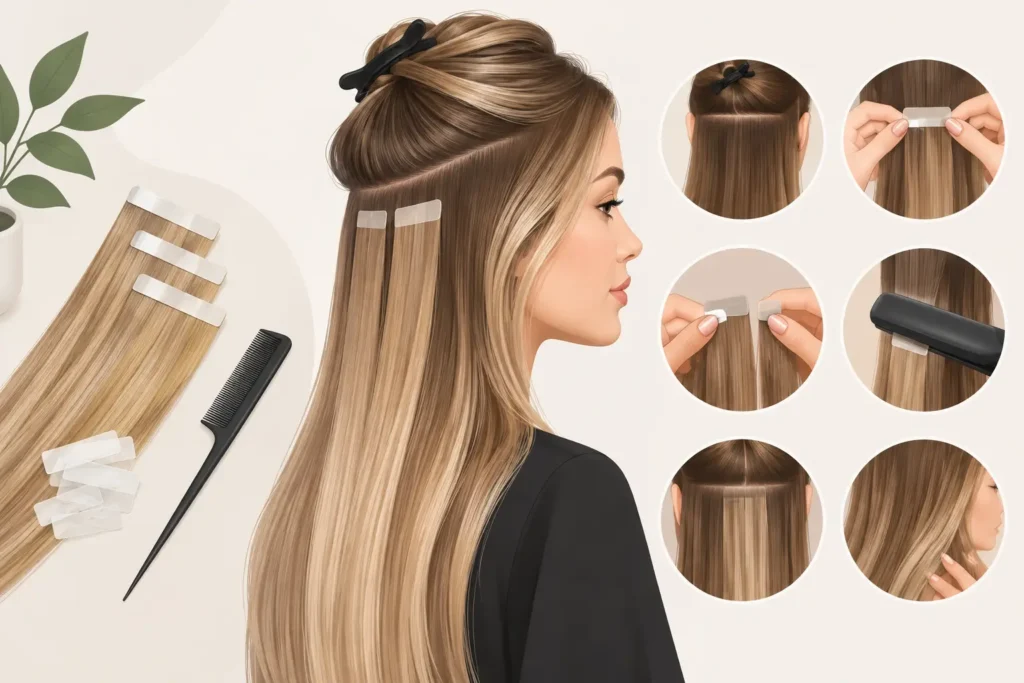
For example, tape applications call for precise panel alignment and clean adhesive preparation, while weft work may require tools that support neat foundation sections and secure stitching. Trying to adapt a keratin tool for another system may save space in a drawer, but it rarely improves the result.
Professionals building a kit should begin with the formats they truly offer, then invest in high-quality essentials for those services. A salon that specializes in refined keratin applications needs depth in its fusion, sectioning, and removal setup before expanding into every possible accessory.
Lighting, Ergonomics, and the Details Clients Feel
Some of the best tools never touch the hair. Bright, color-accurate lighting helps an artist assess root shades, undertones, and blend placement before application. This is especially valuable when selecting premium natural hair for dimensional color or a soft, nearly invisible transition.
Ergonomics matter as well. Repetitive hand movements, prolonged wrist angles, and poorly balanced irons affect an artist over time. A comfortable tool supports steady technique late in the day, when consistency still matters just as much as it did with the first client.
Organization is another quiet marker of professionalism. Clean tools, labeled materials, fresh heat shields, and a clear workstation create a calmer experience for the client and give the artist more attention for placement. Luxury is often felt through this level of preparation.
How to Build a Better Professional Kit
Start with reliable versions of the tools used at every appointment: a temperature-controlled fusion iron, tail combs, sectioning clips, heat protection, bond-shaping tools, remover, removal pliers, and appropriate combs. Then assess what your work actually demands. If you regularly create ultra-fine bonds around the face, invest in tools that improve detail rather than adding unnecessary bulk to the kit.
Essential Hair Extension Tools for Beginners
For artists just starting out, a practical hair extension tool kit should focus on the equipment required for their chosen method. Beginners working with keratin bonds typically need a temperature-controlled fusion iron, sectioning combs, clips, appropriate protective accessories, and tools for safe removal. Prioritize reliable temperature control, comfortable handling, and compatibility with the bonding materials you use. Professional training and correct technique are just as important as the equipment itself.
Replace tools when their performance changes. A fusion iron with uneven heat, clips that no longer hold, or pliers with worn surfaces can affect results gradually before the problem becomes obvious. Regular cleaning, inspection, and storage extend the life of quality equipment and protect your service standard.
Even the best keratin hair extension tools need to be paired with high-quality natural hair. For professionals who want consistent results across different lengths, shades, and textures, NICE HAIR supplies natural human hair from its production in Russia, with international shipping available. Contact our international hair sales manager on WhatsApp to explore available options for your salon.
The most valuable tool in any extension appointment remains professional judgment. When technique, hair quality, and the right equipment are working together, the final result feels light, looks natural, and gives the client confidence every time she moves her hair.
Frequently Asked Questions About Hair Extension Tools
What are the essential hair extension tools for beginners?
A beginner’s hair extension kit depends on the installation method they plan to learn. For keratin extensions, essential equipment typically includes a temperature-controlled fusion iron, a tail comb, sectioning clips, suitable protective accessories, and professional removal tools. Choosing reliable equipment and learning proper application techniques are more important than purchasing a large collection of accessories.
What tools are used for keratin hair extensions?
Professional keratin hair extension tools include fusion irons for softening keratin, tail combs for sectioning, clips for isolating strands, and shaping tools for creating neat attachment points. Removal requires compatible keratin remover and specialized pliers. Each tool should support precise application, comfortable wear, and controlled removal without unnecessary tension on natural hair.
How do you choose a professional hair extension fusion iron?
Look for a fusion iron with stable, adjustable temperature control, smooth working surfaces, and a comfortable grip. The appropriate plate size and temperature range depend on the keratin formulation and extension technique. Consistent heat distribution is especially important for forming small, secure bonds without overheating the attachment material.
Can the same hair extension tools be used for different methods?
Some tools, including sectioning combs and clips, can be used across several extension techniques. However, installation and removal equipment should match the specific method. Keratin extensions, tape-ins, and wefts require different attachment systems. Using tools designed for the correct method helps improve precision, consistency, and safety.
How often should professional hair extension tools be replaced?
There is no universal replacement schedule for all hair extension tools. Their lifespan depends on manufacturing quality, frequency of use, cleaning, and maintenance. Regularly inspect fusion irons for unstable heating, pliers for worn or damaged jaws, and clips for reduced grip. Replace equipment when its condition or performance could compromise the quality of your work.
Certified hair extension stylists with 14+ years of experience. Own production of virgin Slavic hair, 10,000+ bundles in stock, salon in Dubai. Specialization: keratin extensions, ethical sourcing Russia & CIS, cold color technology.