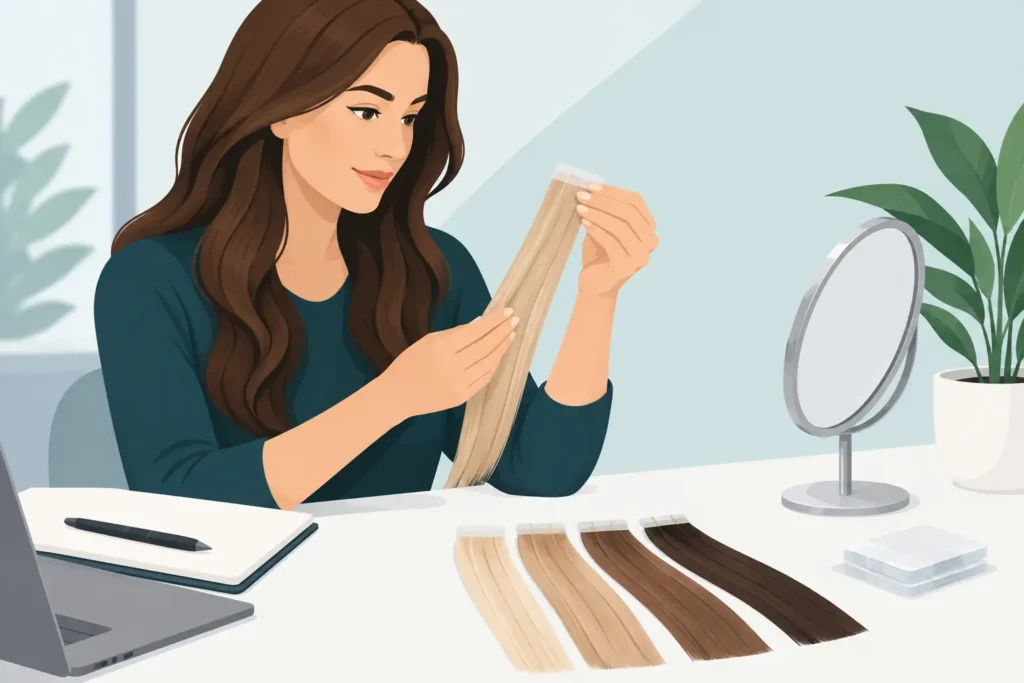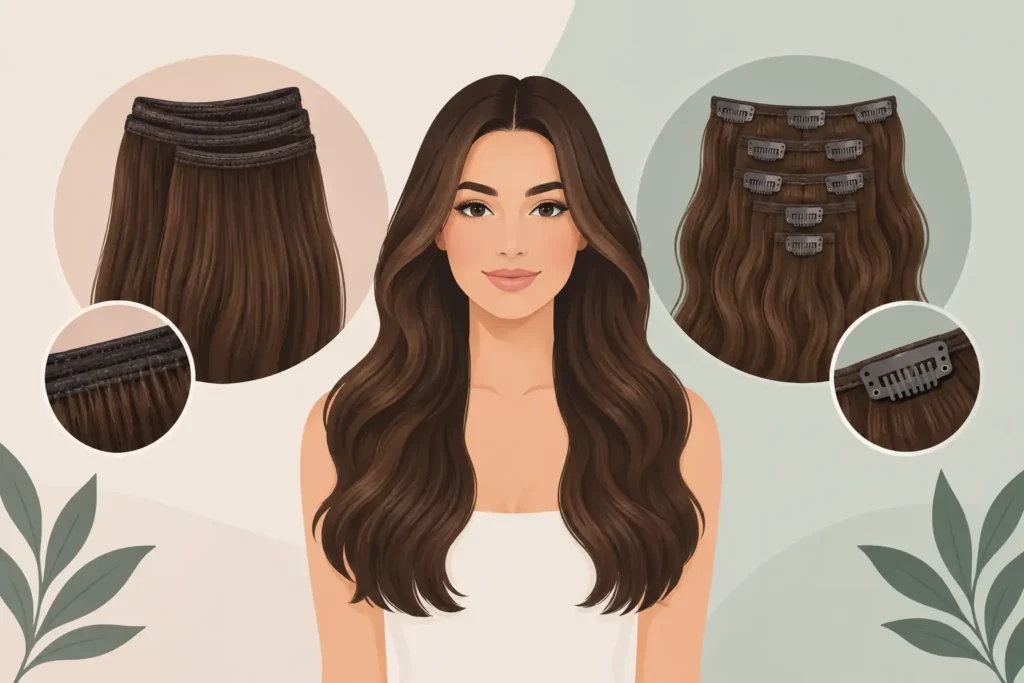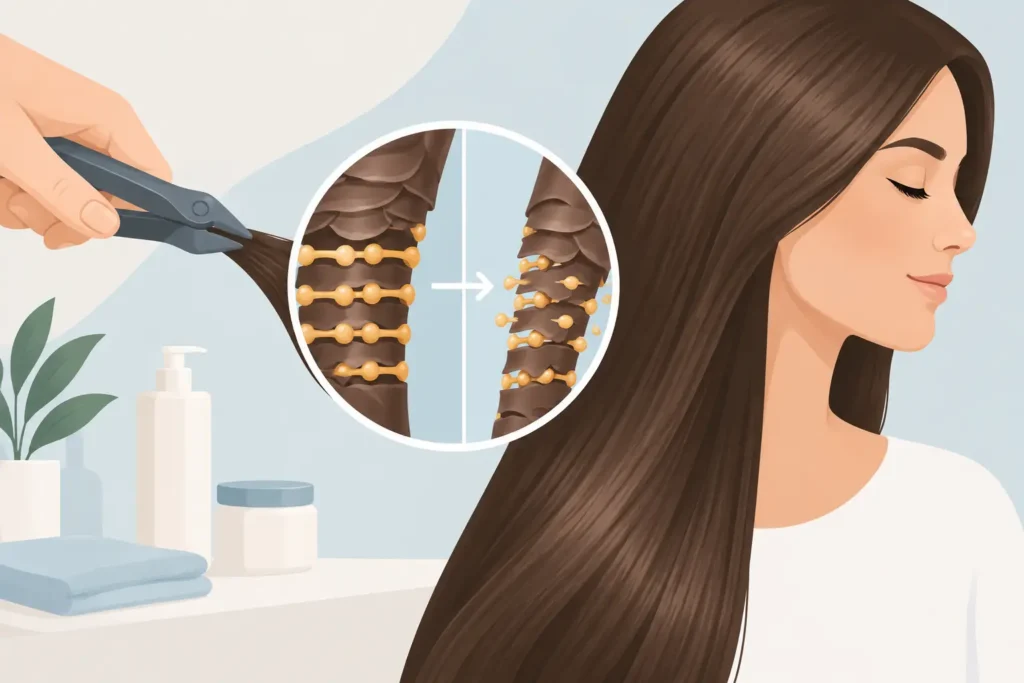
The quality of your wash routine has more impact on keratin extensions than most styling products. Knowing how to wash keratin extensions correctly helps keep the bonds secure, the added hair soft, and your natural hair comfortable at the root. The goal is not to avoid washing – it is to cleanse the scalp thoroughly without pulling, coating, or overheating the keratin bonds.
With premium natural hair and a precise application, keratin extensions should move naturally and feel light. A thoughtful routine protects that result between salon appointments, especially in Dubai’s heat, humidity, frequent workouts, and pool days.
When to wash keratin extensions for the first time
Follow the timing given by your stylist first. In most cases, it is best to wait 24 to 48 hours after a keratin extension appointment before the first wash. This gives the bonds time to fully set and avoids unnecessary manipulation while the installation is still fresh.
After that, wash according to your scalp rather than a rigid schedule. For many clients, two to three washes per week is a comfortable balance. If you have an oily scalp, train regularly, or live an especially active lifestyle, you may need to wash more often. Leaving sweat, sunscreen, dry shampoo, and oil buildup at the roots for too long can cause itching and make individual bonds feel less comfortable.
The trade-off is simple: overwashing can dry the extension lengths, while underwashing can create buildup around the attachment area. A clean scalp and well-moisturized lengths are the right target.
Prepare your hair before getting it wet
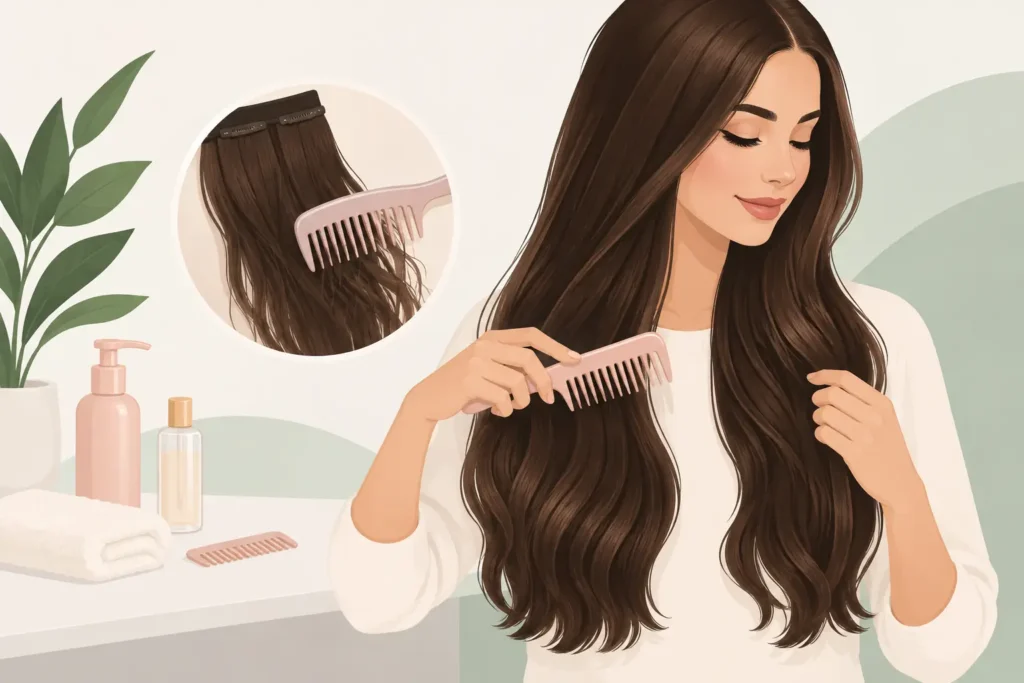
Never begin by soaking tangled extensions. Before stepping into the shower, gently brush your hair while it is dry. Hold the hair close to the roots with one hand and work from the ends upward with the other. Use an extension-safe brush with flexible bristles or a wide-tooth comb, taking care not to catch the keratin bonds.
This small step prevents knots from tightening when wet. It also gives you a chance to notice anything unusual, such as a bond that has slipped, severe matting near the nape, or tenderness at the roots. Do not pull on a loose bond or try to reattach it at home. Keep it aside and contact your extension specialist for guidance.
Before washing, separate the hair into two sections with your fingers. This helps water and shampoo reach your scalp without creating a tangled mass through the lengths.
How to wash keratin extensions step by step
Start with lukewarm water. Very hot water can leave both your natural hair and the extension hair dehydrated, while overly cool water may not properly remove scalp oil and product residue. Let the water run in the direction of hair growth, from roots to ends.
Apply a small amount of professional, extension-safe shampoo to your fingertips and distribute it over the scalp. Focus on the areas that produce the most oil: the hairline, crown, behind the ears, and nape. Use the soft pads of your fingers, not your nails, to massage gently between the bonds.
Avoid scrubbing the keratin capsules directly or rubbing the hair in circles. Circular movements are one of the fastest ways to create tangles at the roots. Instead, use light downward motions and let the shampoo foam travel through the lengths as you rinse.
If your scalp has significant buildup, a second gentle shampoo is better than using a large amount of product once. Rinse carefully and thoroughly. Product left near the bonds can make hair feel heavy and may contribute to slipping over time.
Choose shampoo with the bonds in mind
A sulfate-free shampoo is often a sensible choice because it cleanses without the aggressive feel some stronger formulas create on hair lengths. More than the label, however, the full formula and your scalp’s needs matter. Some very rich shampoos contain heavy oils, butters, or coating ingredients that can build up close to keratin bonds.
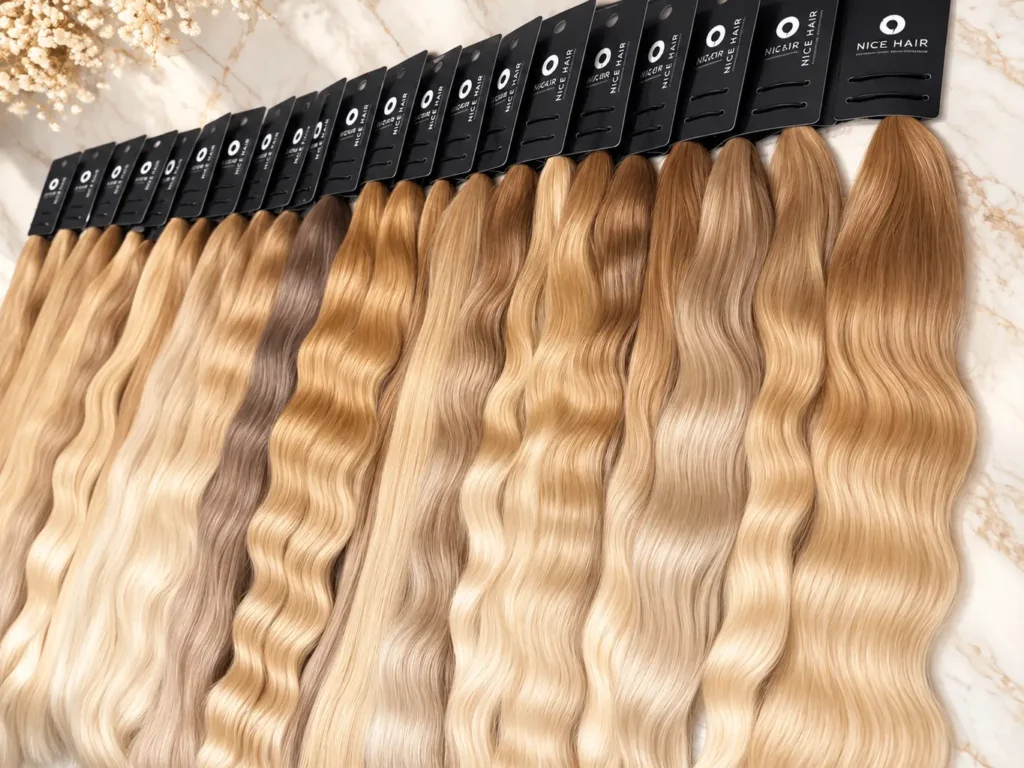
Choose a lightweight, professional-quality cleanser recommended for extensions. If you color your natural hair, select a formula appropriate for color-treated hair as well. At NICEHAIR, aftercare recommendations are tailored to the client’s hair type, scalp condition, color service, and extension format rather than based on one universal product rule.
Condition only where hair needs it
Conditioner, masks, and leave-in treatments belong on the mid-lengths and ends, not at the roots. Keep every conditioning product at least two to three inches away from the keratin bonds. This is particularly important with oil-based masks and serums, which can make the attachment area slippery if applied too close.
Smooth conditioner through the lower lengths with flat hands. Do not twist the hair into a bun or pile it on top of your head while it processes. Let it hang naturally down your back, then rinse until the hair feels clean and silky rather than coated.
Natural extension hair benefits from hydration because it does not receive oil from your scalp in the same way your own growing hair does. Still, more product is not always better. A lightweight conditioner after each wash and a deeper treatment every one or two weeks is usually enough, depending on the hair’s porosity, color history, and heat styling routine.
Dry the bonds completely
Do not go to bed with damp keratin extensions. This is one of the most common causes of tangling near the roots. After washing, squeeze out excess water using a soft microfiber towel or cotton T-shirt. Press and blot – never rub.
Apply a heat protectant to the mid-lengths and ends if you plan to blow-dry. Then dry the bond area first, using medium heat and airflow directed downward. Once the roots and bonds are fully dry, continue through the lengths with a brush designed for extensions.
You do not need to use the hottest setting to get a polished finish. Moderate heat, controlled tension, and a good heat protectant are safer for both your natural hair and premium virgin hair. If you prefer to air-dry the lengths occasionally, that is fine, but the attachment area should always be dried completely.
Shower habits that quietly shorten extension wear
Washing technique is often more damaging than the shampoo itself. Avoid flipping your head upside down under the shower, because the hair can tangle around the bonds. Keep your hair flowing straight down your back and avoid gathering it into a tight knot while wet.
Be cautious with dry shampoo as well. It can be useful between washes, particularly around the hairline, but repeated application can create powdery buildup around the bonds. Use it sparingly, hold the spray away from the attachment area, and wash it out within a reasonable time.
After swimming, rinse your hair as soon as possible. Chlorine, salt water, and mineral-heavy pool water can leave extensions dry and dull. Wetting the lengths with clean water before swimming and securing hair in a loose braid can reduce absorption, but it does not replace rinsing and conditioning afterward. Never wear a tight ponytail or high bun that puts repeated tension on the same bonds.
What to do if your extensions feel tangled or dry
If the lengths feel dry, reassess your heat routine before adding more oil. Frequent curling, flat ironing, and high-temperature blowouts can dehydrate even excellent-quality natural hair. Lower the temperature, use heat protection consistently, and add a lightweight mask only from mid-length to ends.
If you feel small tangles close to the roots, separate them early and patiently with your fingers before brushing. Persistent matting, discomfort, or multiple slipping bonds are not problems to mask with extra product. They are reasons to book a professional check. Extension maintenance is most effective when concerns are addressed while they are still small.
A wash routine that protects your investment
Keratin extensions are designed to support an effortless, natural-looking result, but they depend on careful habits. Brush before washing, cleanse the scalp gently with lukewarm water, keep conditioner away from the bonds, and dry the attachment area completely every time.
The best routine is the one that suits your scalp, lifestyle, and hair texture without compromising the installation. If something feels different after a wash – whether it is tangling, tenderness, or a loose bond – trust that observation and ask your stylist early. A precise adjustment is always kinder to your natural hair than waiting for a small issue to become a difficult removal.
Certified hair extension stylists with 14+ years of experience. Own production of virgin Slavic hair, 10,000+ bundles in stock, salon in Dubai. Specialization: keratin extensions, ethical sourcing Russia & CIS, cold color technology.