The success of any hair extension service depends on more than flawless installation techniques. Even the most experienced extension artist cannot achieve long-lasting results using low-quality hair.
For professionals, understanding how to evaluate weft quality before installation is an essential skill. Proper assessment helps prevent client complaints, reduces maintenance issues, and protects your salon’s reputation.
This guide explains the key factors every hair extension specialist should evaluate when receiving hand-tied, flat, or genius wefts. The recommendations are based on professional quality control standards used in the hair extension industry.
Step 1: Verify Product Specifications
Before inspecting the construction of the weft itself, verify that the product matches the supplier’s specifications.
Weight
Always check whether the actual weight corresponds to the stated weight.
Weight directly affects:
- Hair density
- Final volume
- Coverage
- Installation planning
A significant discrepancy may indicate manufacturing inconsistencies. According to professional assessment guidelines, weight verification should be one of the first quality checks performed.
Length
Measure several sections of the weft to ensure the actual length matches the ordered length.
A minor tolerance may be acceptable, but large discrepancies affect:
- Client expectations
- Blending
- Pricing
- Installation strategy
Shade Accuracy
Color consistency is critical for achieving seamless blends.
Evaluate:
- Root shade
- Mid-length shade
- End shade
- Overall tone consistency
Even small color variations become highly visible after installation.
Product Dimensions
Verify that the dimensions correspond to the ordered specifications, whether custom-made or standard-sized wefts.
Step 2: Assess Hair Density Distribution
One of the easiest ways to identify premium-quality hair is by evaluating density throughout the weft.
Questions to ask:
- Is the density consistent from top to bottom?
- Are the ends excessively thin?
- Is the weight evenly distributed?
Premium manufacturers maintain fullness throughout the length, minimizing excessive tapering.
Uneven density often indicates poor raw material selection or inconsistent manufacturing processes.
Step 3: Inspect Cuticle Alignment
Cuticle alignment is one of the most important indicators of hair quality.
Properly aligned hair:
- Remains smooth longer
- Experiences less tangling
- Maintains shine
- Requires less maintenance
Misaligned cuticles can create friction, causing matting and shortening the lifespan of the extensions. A simple test is to gently slide your fingers along the hair shaft in both directions. Excessive resistance may indicate cuticle issues.
Hand-Tied Wefts

Hand-tied wefts require additional inspection because their construction directly impacts durability and comfort.
Construction Quality
Inspect the stitching carefully.
Look for:
- Loose threads
- Uneven stitching
- Weak attachment points
- Structural inconsistencies
Professional assessment standards recommend checking both the top edge and side sections for loose threads or manufacturing defects.
Number of Rows
Some manufacturers use different stitching configurations than advertised.
Always verify:
- Row count
- Stitch density
- Overall reinforcement
Any discrepancies should be clarified with the supplier before installation.
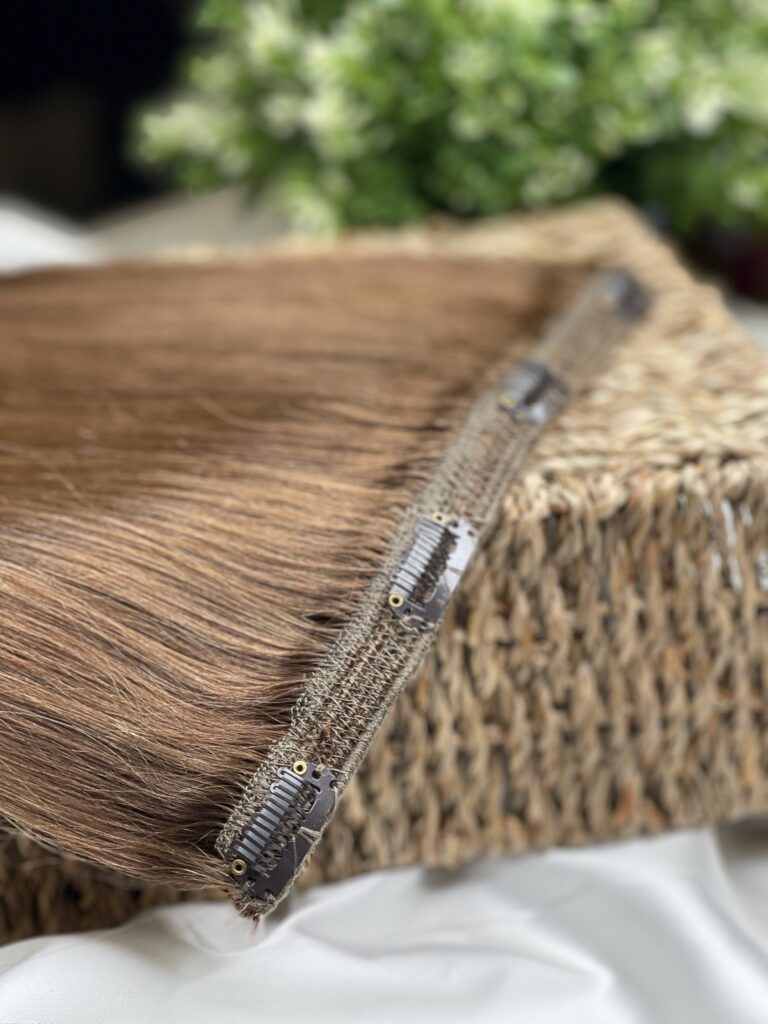
Flat and Genius Wefts

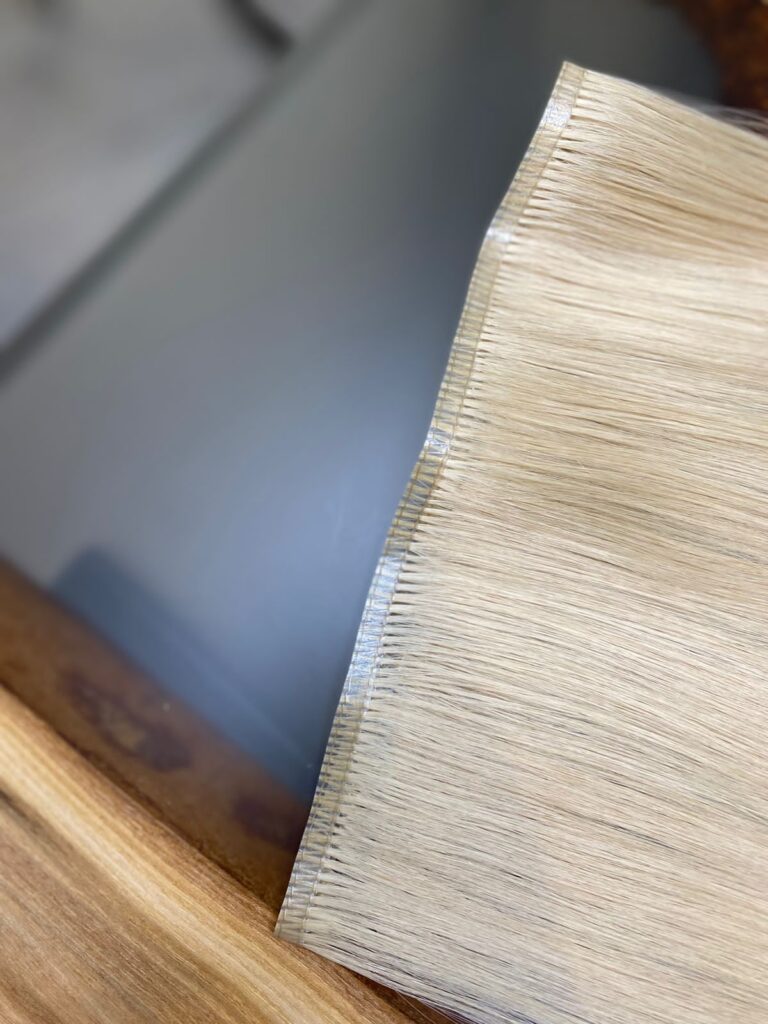
lat and Genius wefts require additional technical inspection.
Top Edge Inspection
Carefully examine the bonded section.
Check for:
- Hair protruding from the bonded area
- Uneven bonding
- Excessive adhesive residue
High-quality Genius wefts should have a clean, compact top edge with minimal bulk.
Edge Cleanliness
Professional-quality wefts should have clean edges without:
- Fabric residue
- Tape remnants
- Excess bonding material
Clean finishing indicates strong manufacturing standards.
Stitch Consistency
The stitching should remain uniform throughout the entire length of the weft.
Look for:
- Consistent spacing
- No broken sections
- Straight construction
- Uniform tension
Irregular stitching often predicts future shedding and durability issues.
Building a Reputation Through Quality Control
Successful extension specialists understand that quality control is not optional. Implementing a standardized inspection process allows you to:
- Deliver more predictable results
- Reduce client complaints
- Increase retention rates
- Protect your professional reputation
- Improve extension longevity
A systematic quality assessment process not only protects your work but also helps establish your reputation as a trusted extension specialist committed to excellence.