Extensions work beautifully on short hair down to roughly chin-length or collarbone lob, provided two things are true: your natural hair has enough length to cover the attachment points, and the extensions are strategically placed and blended through a proper cutting technique.
The Real Minimum Length for Extensions
The most common question is: “Is my hair long enough?” The answer depends on your hair’s density and cut, not just its total length.
General rule: Your natural hair should be around 5-7 cm — for extensions to blend convincingly and attach securely.
The two-minute test: Find where an extension band would sit (roughly 1–2 inches below your crown, level with the tops of your ears). Check whether a full section of your own hair hangs about 4 inches below that point. If yes, you have adequate coverage. If not, no styling trick will hide the attachment points.
Important distinction: Two people with the same total hair length can get opposite results. One with layers has coverage; one with a blunt cut does not. The layer falling over the top matters more than the overall length.
Best Extension Methods for Short Hair
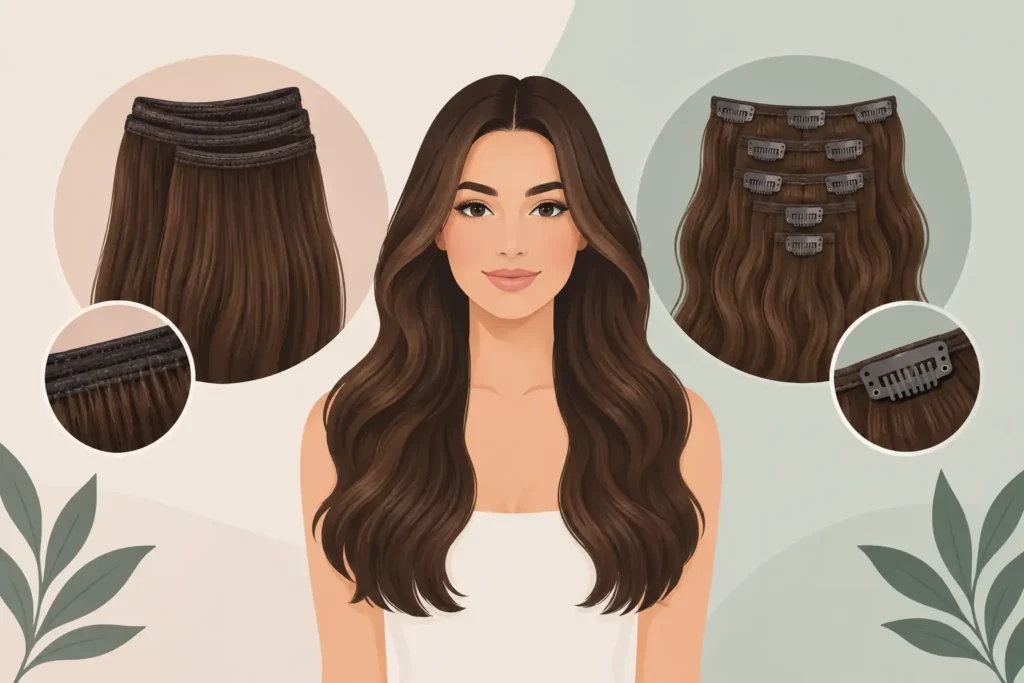
01 Hand-Tied Wefts Top Choice
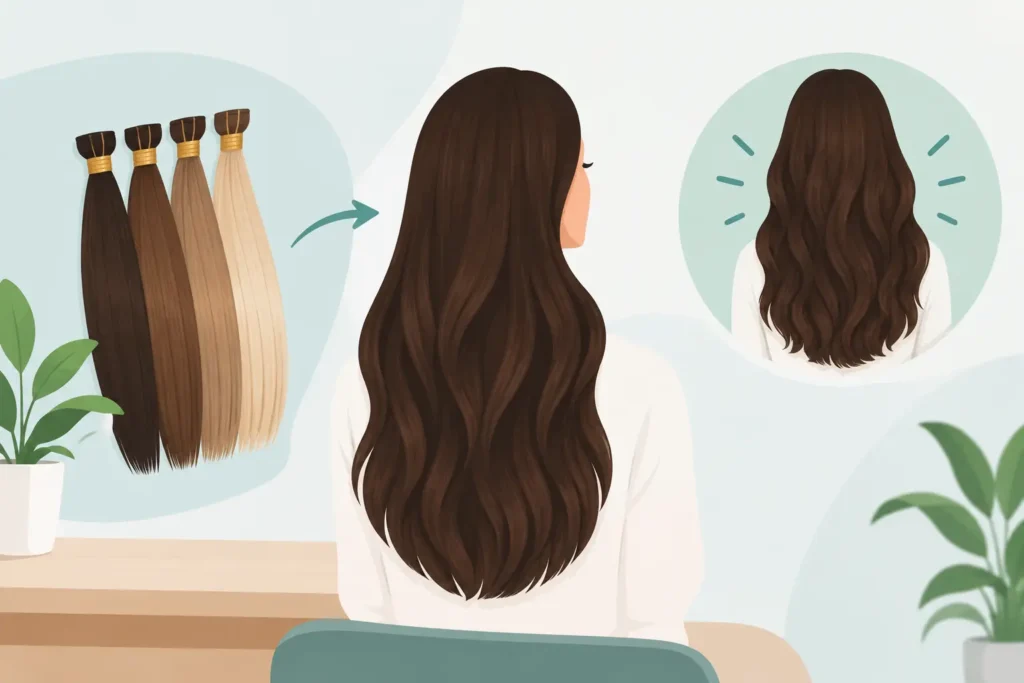
Hand-tied wefts are widely considered the most versatile and natural-looking option for short hair. They lay extremely flat, distribute weight evenly, and can be layered to fill gaps from short layers. For short hair, stylists typically install 2–3 rows with blending cuts to soften the transition.
Best for: Blunt bobs, shoulder-length hair, uneven layers, and clients wanting maximum fullness and length.
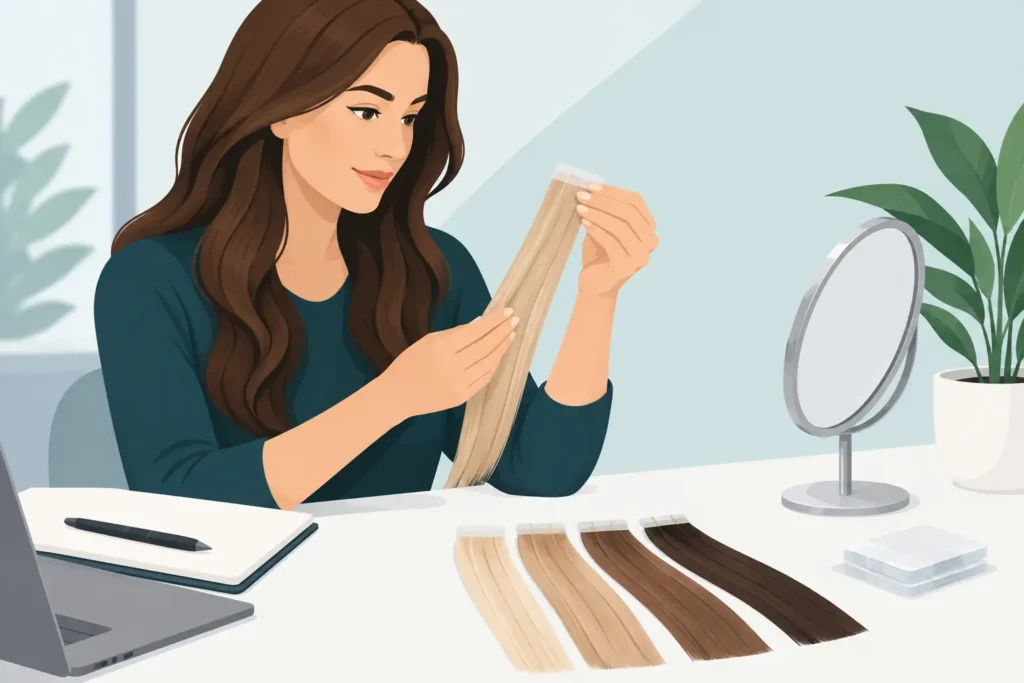
02 Tape-Ins Fine to Medium Hair
Tape-ins are lightweight, flat, and can be placed with precision around the head. They create natural density at the sides — an area where short-haired clients often struggle. They are also one of the most discreet methods available.
Avoid tape-ins if: Your hair is very coarse, unevenly layered, or heavily textured.
03 K-Tips and I-Tips Precision Placement
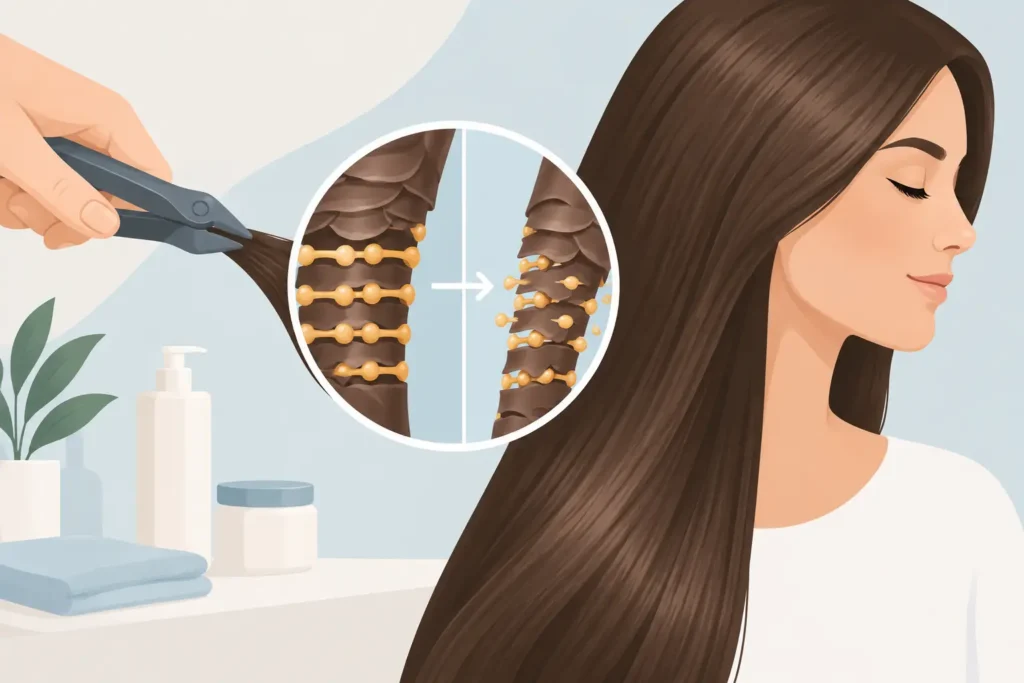
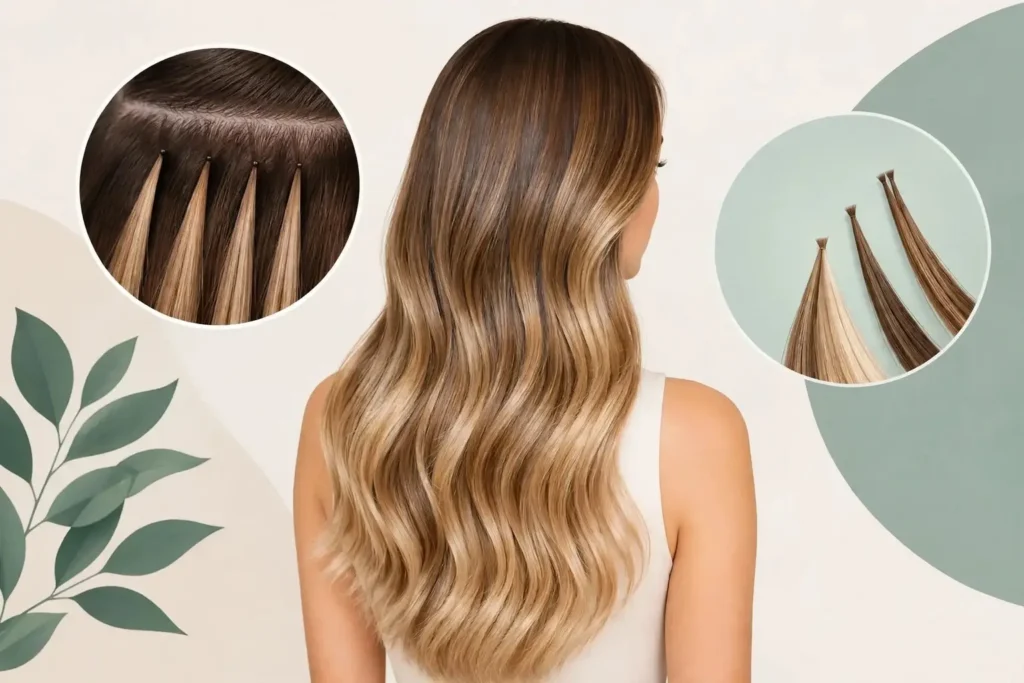
Strand-by-strand methods like K-tips and I-tips excel on short hair because individual bonds can be placed precisely around the head, including the hairline and nape where blending is critical. Because each bond carries only a few strands, the transition from natural to extension length can be graduated and cut to blend seamlessly.
Caveat: These require chin-length or longer. If your hair is too short, individual strands can poke through short layers.
The Blending Secret: It’s a Haircut, Not Just an Install
The single most important truth about extensions on short hair: The blend is achieved through cutting, not just installation.
Going from a bob to mid-back length means the extension hair must be layered, point-cut, and shaped into your natural hair so there’s no visible “shelf” where your hair ends and the extensions begin. Budget for this in your appointment time — it’s the difference between hair that looks grown and hair that looks bought.
Layering is key: A professional stylist can carefully trim extensions so they taper and flow naturally with your haircut. They may also soften the ends of your natural hair to remove any blocky edge.
Texture is your friend: Soft waves or loose curls break up choppy areas and allow natural hair and extensions to merge more easily. Pin-straight styling leaves nowhere for imperfections to hide.
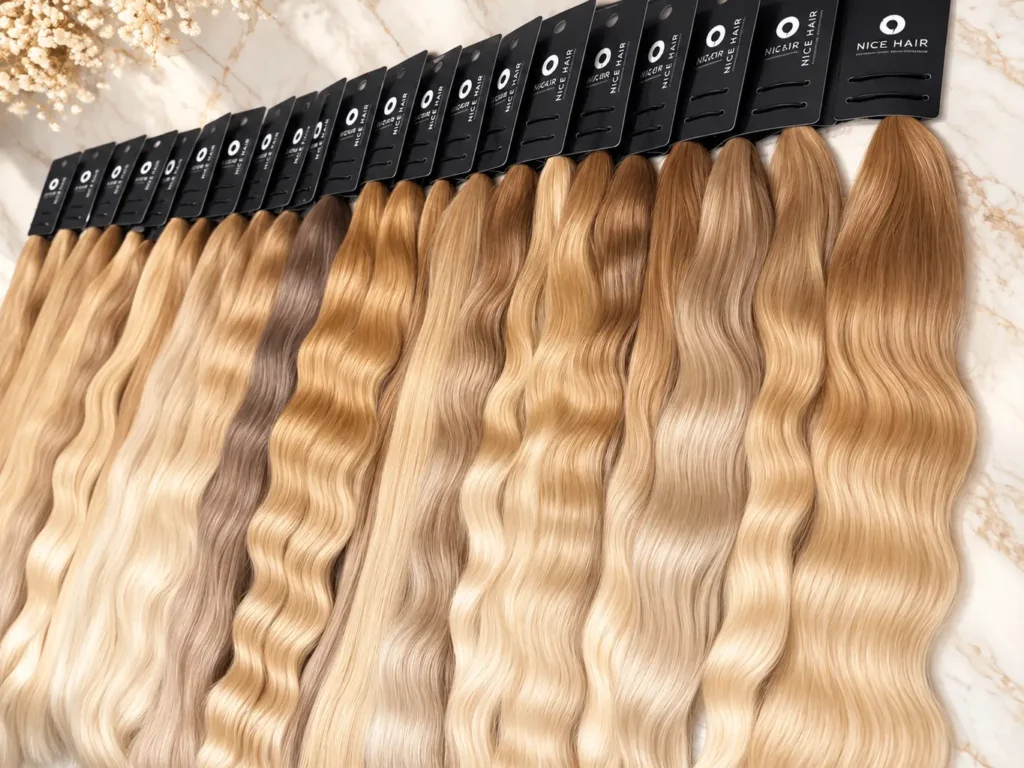
Colour matching matters more on short hair: Short hair reveals mid-length tone more than roots. Match to your mid-lengths, not your roots — root-matching is a more obvious mistake on short hair than anywhere else.
Before & After: What Results Are Realistic?
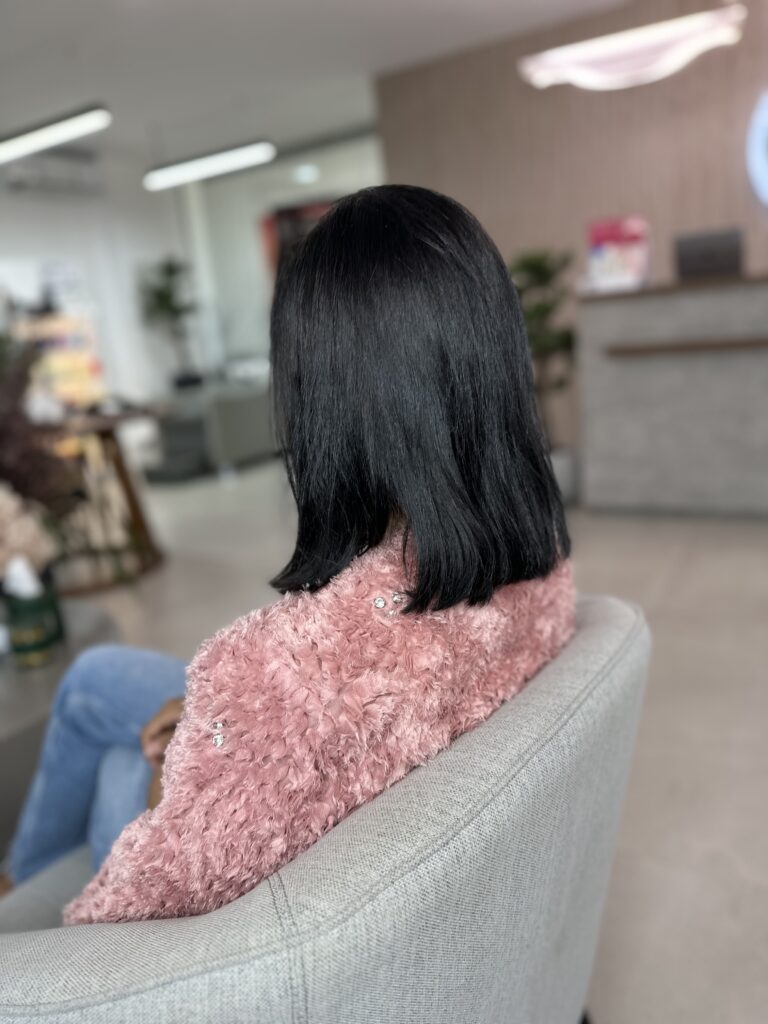
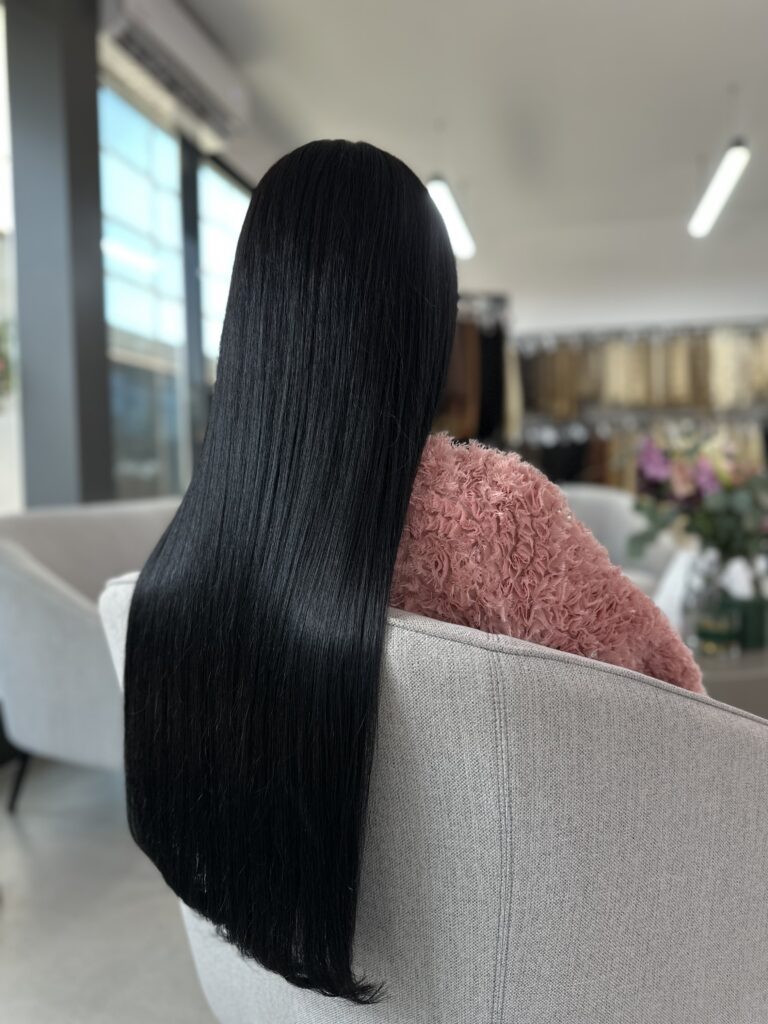
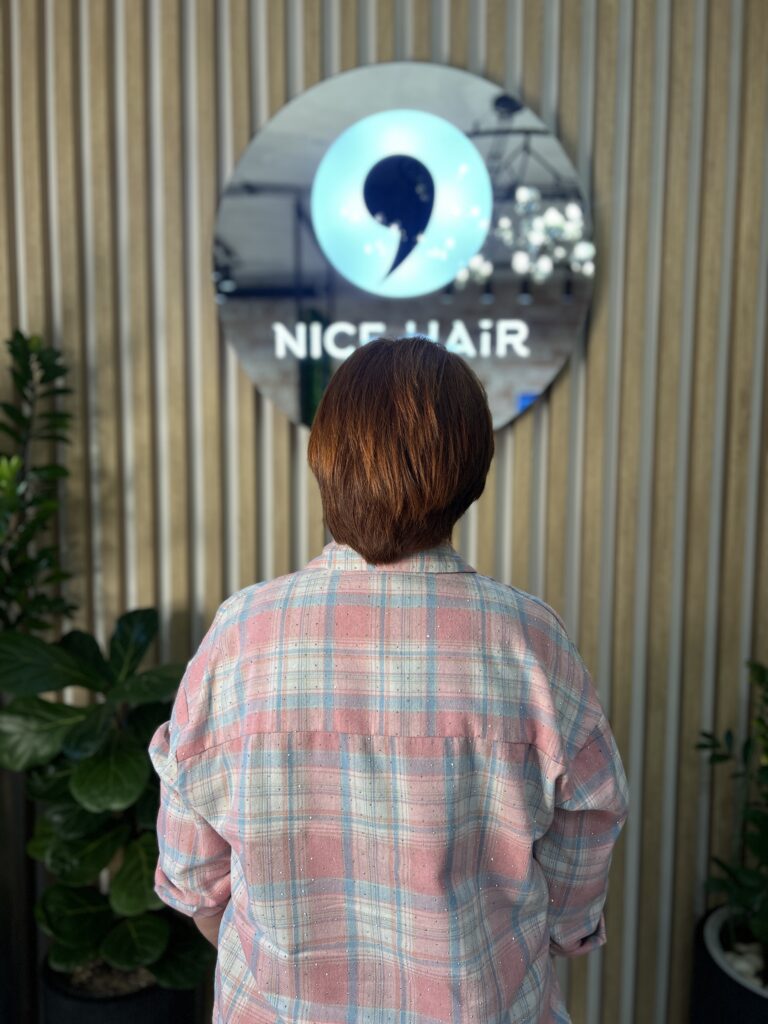
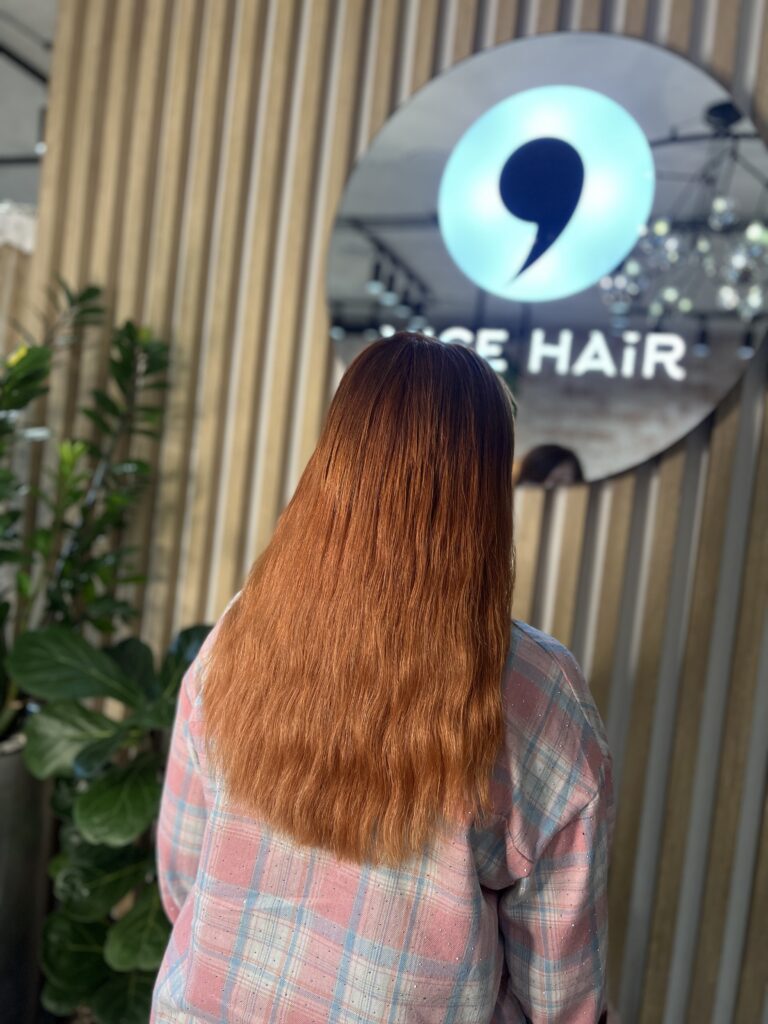
Both clients started with relatively short hair, but each required a different approach to create a seamless transition. With blunt or dense short cuts, enough extension hair must be added through the mid-lengths to soften the original weight line before additional length can look convincing.
Do Short Hair Extensions Cost More?
It is easy to assume that shorter natural hair means fewer extensions. In reality, the opposite can be true. When transforming a short bob or cropped cut into significantly longer hair, the stylist needs to do more than simply add length. There must be enough extension hair to build density through the mid-lengths, soften the line of the original haircut, and create a seamless transition into the new length.
For comparison, someone with long but fine natural hair may only need extensions to add fullness. A client with a short, blunt haircut may need considerably more hair to disguise the weight line and prevent the finished result from looking like short hair sitting on top of long extensions. This is also why an accurate quote for short-hair extensions is best given after a consultation. Two clients with the same starting length may need completely different amounts of hair to achieve the same finished look.
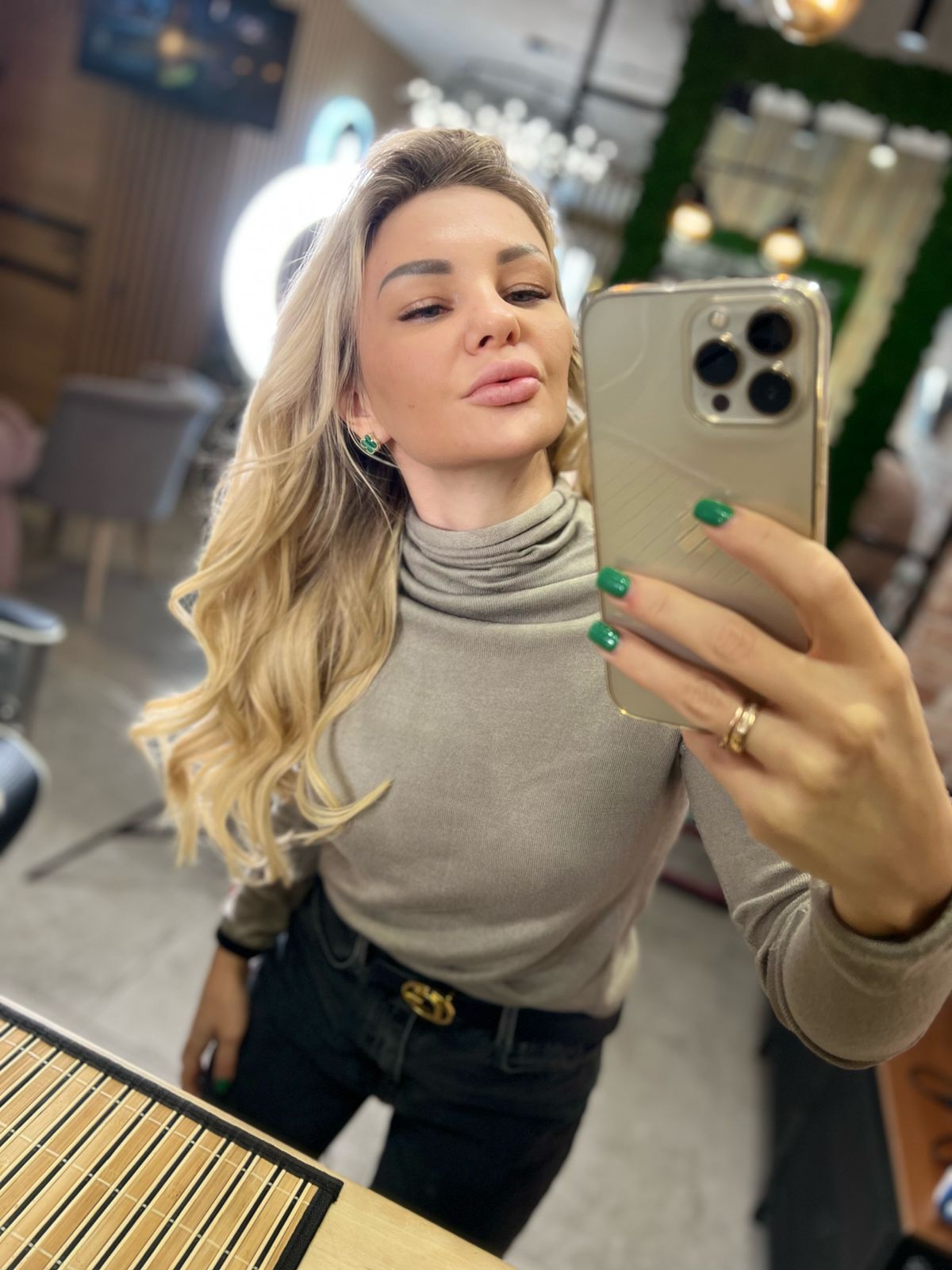
Certified hair extension stylists with 14+ years of experience. Own production of virgin Slavic hair, 10,000+ bundles in stock, salon in Dubai. Specialization: keratin extensions, ethical sourcing Russia & CIS, cold color technology.