A fuller result is not created by choosing the highest possible number of strands. The real question behind how many extensions for volume is how much additional density your own hair can support while still looking completely natural in motion, at the roots, and through the ends. A precise match considers your starting density, haircut, desired length, and the effect you want to see in the mirror.
For some clients, a subtle volume enhancement takes only a small amount of hair. For others, especially with a blunt haircut, very fine ends, or a goal of dramatic length, a fuller installation is necessary to create a balanced shape. The right amount should never feel heavy, visible, or difficult to style.
How Many Extensions for Volume Do You Need?
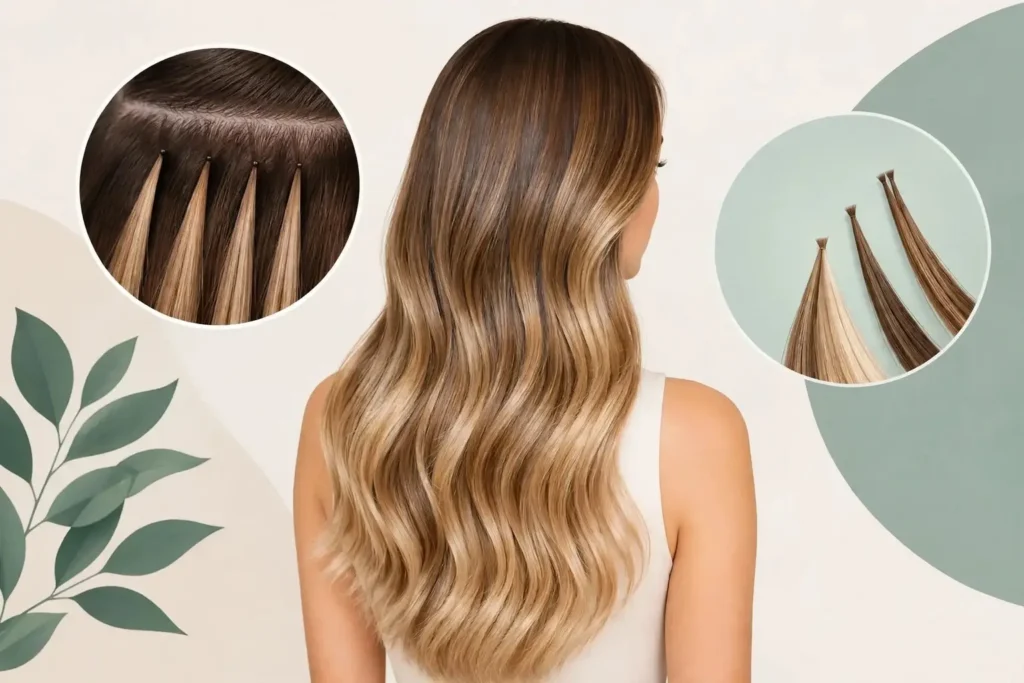
For hot keratin extensions, volume is usually measured in strands and grams. There is no single number that suits every client, but these ranges provide a useful starting point:
- 20 to 50 strands can add discreet density around the sides, crown, or ends. This works well when your natural hair is already fairly full but needs refinement.
- 60 to 100 strands are often selected for a noticeable yet natural volume increase on fine to medium-density hair.
- 100 to 150 strands may be needed for a full-volume result, particularly when adding length as well as density.
- 150 to 200+ strands can be appropriate for very thick natural hair, a significant length transformation, or a highly voluminous finish. This is always assessed carefully to protect the natural hair.
Numbers are only a framework. A client with fine hair may need more strands than expected to fill out a blunt perimeter, but each strand may need to be lighter. Someone with thick hair may need fewer visible rows for volume, yet require more total hair to blend a long extension length into their own density.
The Difference Between Volume and Length
Adding length almost always requires added volume. If the extensions are much longer than your own hair but too few in number, the result can look thin through the ends. The goal is not simply to make hair longer. It is to create a consistent density from the root area through the final inch of the hairstyle.
For example, a client with shoulder-length, fine hair who wants only fuller ends may be beautifully served by a modest volume application. The same client choosing waist-length hair will need a larger amount of extension hair to prevent a narrow, stringy silhouette.
Your haircut matters as much as your length. Soft, layered hair usually blends with less added density because the transition is already diffused. A sharp, one-length bob or blunt lob often needs more hair at the bottom to maintain that clean, expensive-looking line after extensions are added.
Why grams matter alongside strand count
Not every extension strand weighs the same. A fine micro-strand and a standard keratin strand can have different weights, even if the strand count is identical. That is why a consultation should include both the number of attachment points and the total amount of hair used.
At NICEHAIR, the stylist evaluates the client’s natural hair section by section rather than relying on a fixed package. The attachment must be proportionate to the natural strand it is secured to. This protects comfort and helps prevent unnecessary tension while still delivering visible density.
Your Natural Hair Density Sets the Limit
Hair extensions should enhance your hair, not ask it to carry more than it comfortably can. Fine hair can absolutely achieve beautiful volume, but the method is different from an application for dense, strong hair. The stylist may use smaller bonds, lighter strands, and strategic placement to distribute the weight evenly.
Medium-density hair is often the most flexible starting point. It can support a broader range of volume goals, from a soft everyday enhancement to a more glamorous finish. Thick hair has a different challenge: the extensions must be dense enough to blend with the client’s own hair, particularly underneath and at the ends.
Hair condition also changes the recommendation. If hair is fragile from frequent lightening, heat styling, or recent chemical services, less weight may be the responsible choice. A premium result is never defined by maximum volume at one appointment. It is defined by an application that remains comfortable, discreet, and respectful of the hair’s condition over time.
Placement Can Create Volume Without Excess Weight
A skilled extension application is not about filling every possible area. Placement determines where the eye sees fullness and where the hair needs support. In many cases, strategic density around the occipital area, sides, and perimeter creates a more luxurious profile without overloading the crown.
The crown is especially important. Extensions placed too high can become visible when you move, part your hair, or wear it up. A professional stylist leaves a secure natural-hair margin around the hairline and parting while creating fullness beneath it. This allows the extensions to remain hidden in everyday styling.
The ends deserve equal attention. Many clients ask for “volume” when what they truly notice is transparency in the last few inches of their hair. Building density through the lower sections can make a ponytail, loose waves, and straight styling look noticeably more polished, even if the root area remains light and natural.
A natural result should move naturally
The best volume does not look like a separate layer sitting on top of your hair. It moves with your own hair, holds a soft shape, and looks balanced from the front, side, and back. This depends on color matching, texture matching, strand thickness, and precise sectioning – not only on the amount of hair used.
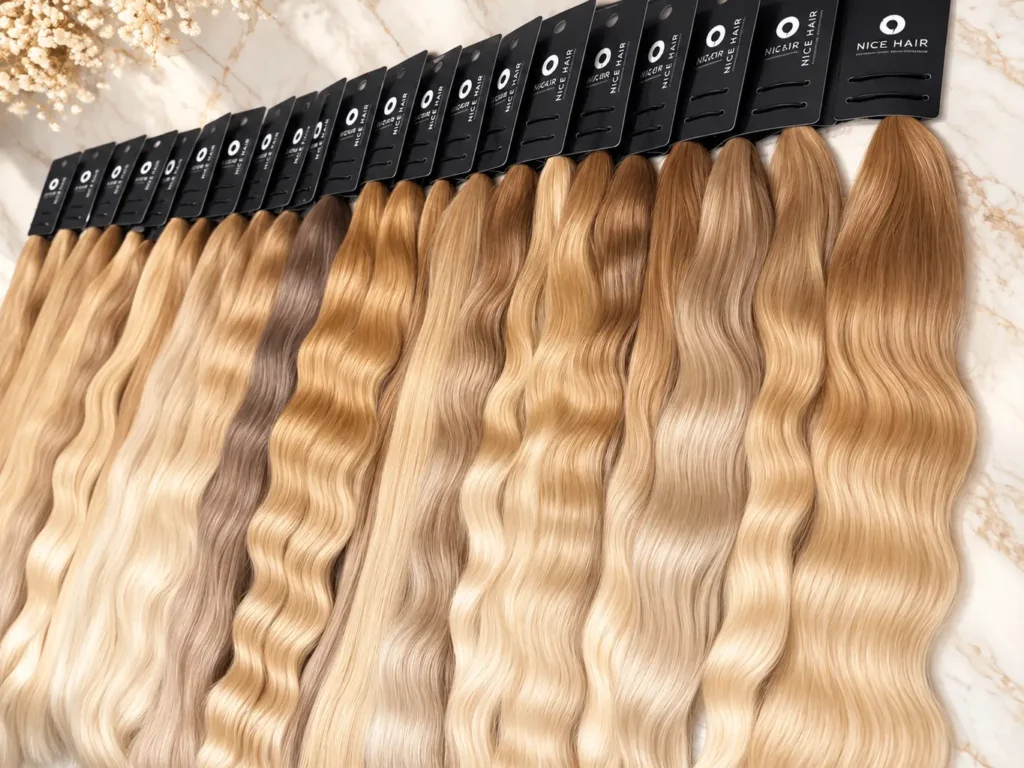
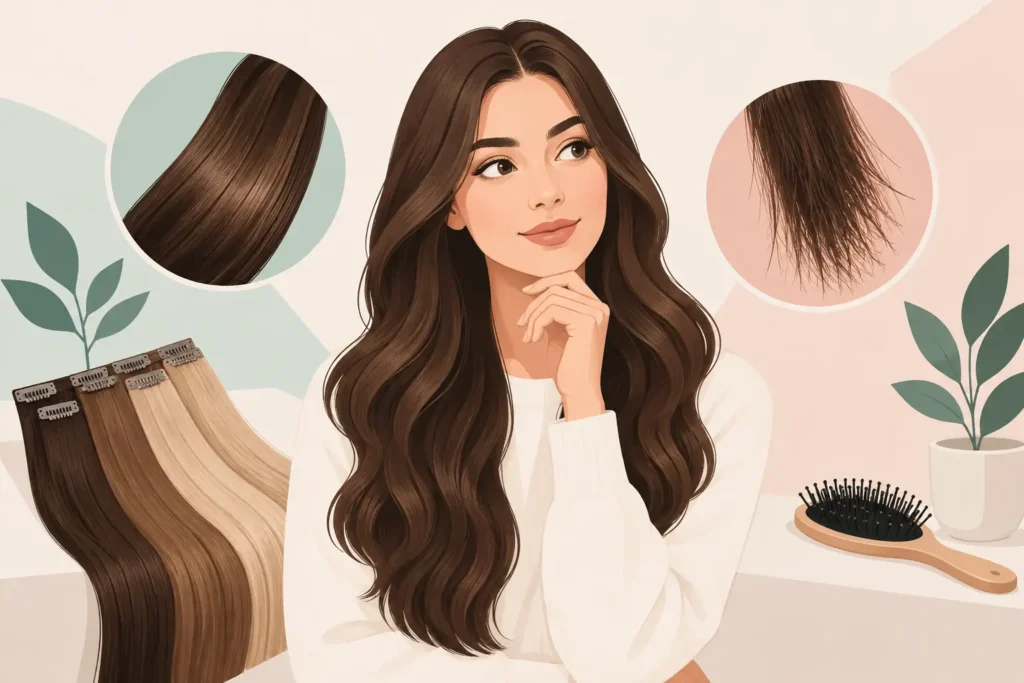
For a dimensional color, a stylist may combine two or more closely matched shades. That approach can make the result look lighter and more textured without relying on an excessive number of extensions. With high-quality virgin Slavic hair, the cuticle direction, natural shine, and soft movement also contribute to an undetectable blend.
What to Expect at a Volume Consultation
A proper consultation begins with your natural hair, not a preset extension quantity. Your stylist should look at density near the scalp, the condition of the mid-lengths and ends, your haircut, and how you normally wear your hair. Bring reference photos, but be open to a recommendation that adjusts the quantity or length for a more believable result.
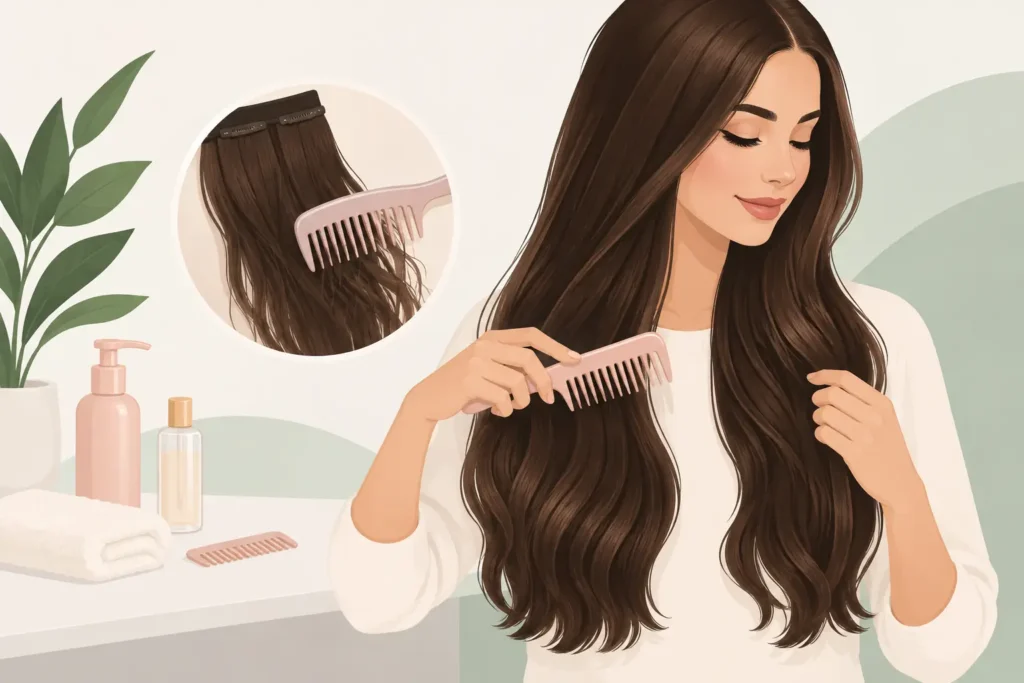
It also helps to discuss your routine honestly. If you wear your hair in a high ponytail every day, swim frequently, or prefer minimal styling time, placement and volume should be adapted to those habits. Extensions can be highly versatile, but they still need appropriate home care and regular maintenance.
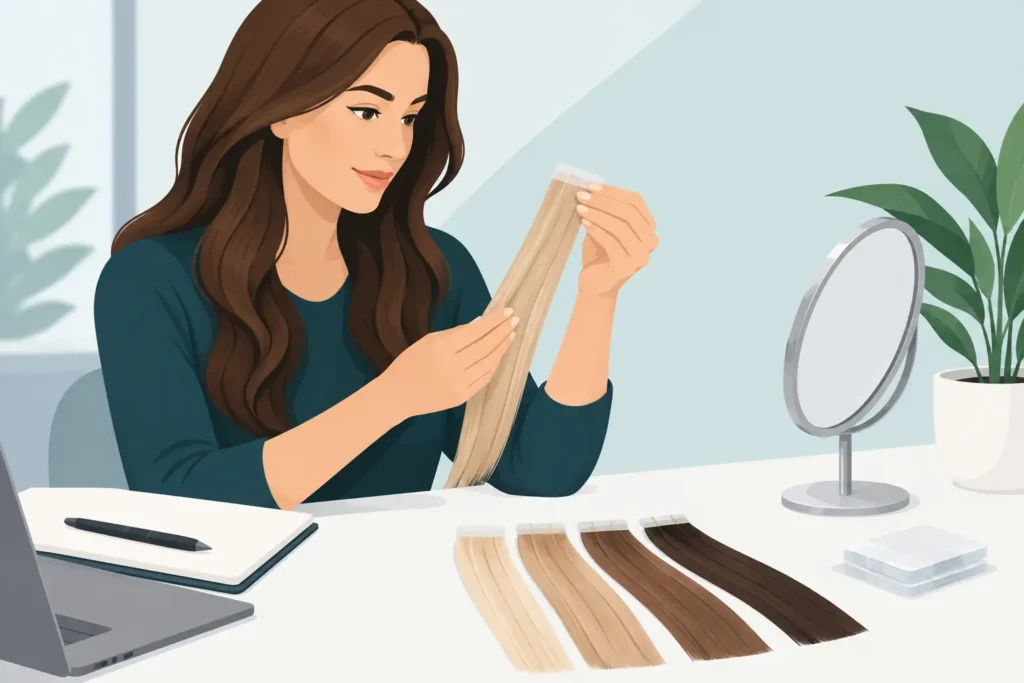
Ask to see the hair against your own color in natural light. A shade that appears perfect indoors can look too warm, cool, or flat outside. If you have a blended color, the right match may be a custom mix rather than one single shade.
When Less Volume Is the Better Choice
More hair is not automatically more luxurious. An overly dense application can feel heavy, take longer to dry, and make fine natural hair harder to blend as it grows out. It may also limit comfortable updos if the placement is too close to areas that move most.
A lighter application can be the right choice when you want a subtle first experience with extensions, are rebuilding hair health, or mainly want density for occasional styling. You can always add volume at a future appointment if your natural hair and lifestyle support it. Starting with a considered amount gives you room to learn what feels best.
The most flattering extension plan is personal: enough hair to create the shape you want, but never so much that comfort, movement, or hair health is compromised. A free professional consultation can turn a vague wish for “more volume” into a precise plan that feels as natural as it looks.
Certified hair extension stylists with 14+ years of experience. Own production of virgin Slavic hair, 10,000+ bundles in stock, salon in Dubai. Specialization: keratin extensions, ethical sourcing Russia & CIS, cold color technology.