Is Remy Hair Silicone-Free? Coatings, Quality & Key Differences
A glossy bundle can look flawless on the first day and still become dry, tangled, or difficult to style after a few washes. That is why the question is Remy hair silicone-free matters far more than most extension labels suggest. “Remy” describes how the hair was collected and aligned. It does not, by itself, tell you whether the hair has been coated with silicone.
For anyone investing in extensions that should blend naturally, move beautifully, and remain manageable through regular care, the distinction is essential. The most trustworthy choice is not made from a single label. It comes from understanding the raw hair, its processing history, and the supplier’s willingness to explain both clearly.
Is Remy Hair Silicone-Free by Definition?
No. Remy hair is not automatically silicone-free.
The term Remy refers to hair with cuticles aligned in one direction, from root to tip. When the cuticle direction is preserved, strands are less likely to catch against one another. This supports a smoother feel, more natural movement, and better resistance to tangling than hair that has been mixed without regard for direction.
Silicone is a separate issue. A manufacturer may apply a silicone-based conditioning coating to Remy hair, particularly after color work or other processing. The coating can create immediate shine and slip, making hair feel exceptionally soft when it is first unpacked. That does not necessarily mean the hair is poor quality, nor does it mean every silicone treatment is deceptive. But it does mean that “Remy” alone cannot prove what is on the hair.
This is also why phrases such as “100% human hair” and “Remy” should be treated as starting points, not a full quality report. Ask what the label does not answer: Was the hair chemically processed? Has it been coated for shine? How will it feel after several washes? Can the supplier describe the sourcing and production steps?
Why Silicone Can Be a Concern in Hair Extensions
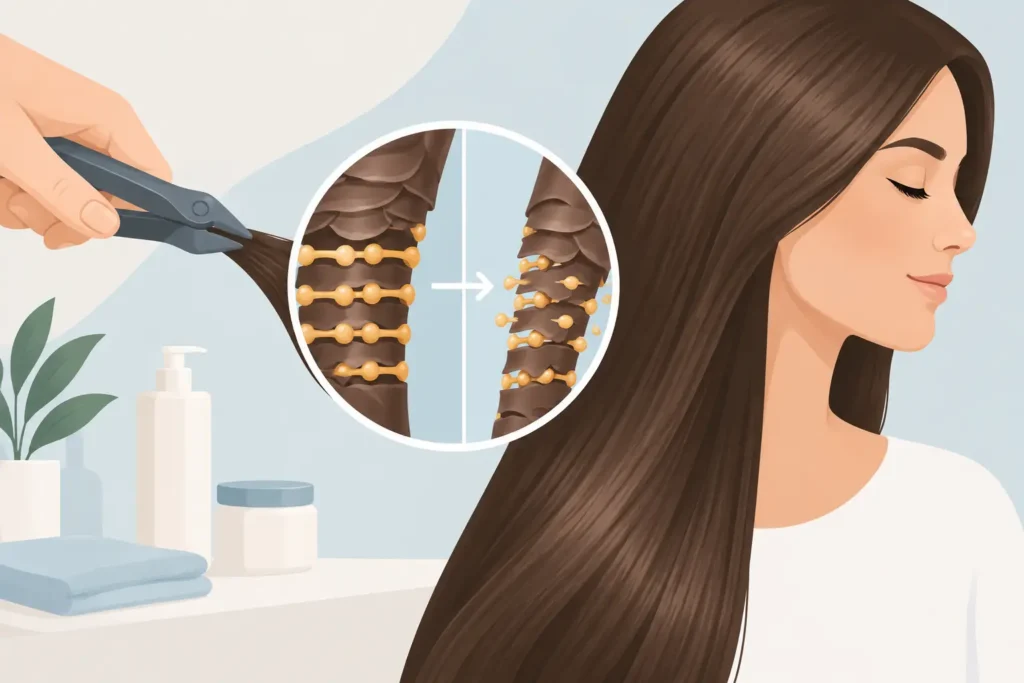
Silicones are widely used in hair care because they form a fine film over the surface of the strand. This film can reduce friction, add shine, and make hair easier to comb. In moderation, that can be useful. The concern arises when a heavy coating is used to conceal a compromised cuticle or uneven processing.
At first, coated extensions may feel silky and look unusually reflective. After repeated washing, however, part of that coating can wear away. If the underlying hair has been overprocessed, stripped, or poorly sorted, the change can be noticeable: reduced softness, more friction, dryness at the ends, and tangling that was not apparent at purchase.
For clients, this can feel like the hair suddenly changed. In reality, the initial finish may have been doing too much of the work. For stylists and salon owners, it can create an even more serious issue. A beautiful installation depends on predictable hair behavior, especially when cutting, coloring, heat styling, or matching a new batch to an existing client’s extensions.
Silicone-free hair is not automatically better in every situation. Hair without a heavy surface coating may feel more natural rather than dramatically slippery from the start. It can also reveal its real condition more honestly. That transparency is valuable because it lets you choose hair based on actual strand quality, not only its first impression.
Remy, Virgin, and Silicone-Free Are Different Claims
These terms are often placed together, but they describe different characteristics.
Remy hair refers to aligned cuticles. Virgin hair generally means hair that has not been chemically altered before collection, although buyers should still ask how that definition is applied by the seller. Silicone-free means that no silicone coating has been added, or that a supplier specifically represents the hair that way.
A bundle can be Remy and virgin, yet receive a finish during production. It can be Remy but colored to achieve a specific shade. It can be silicone-free but still require thoughtful conditioning and heat protection. None of these words replaces a conversation about the complete process.
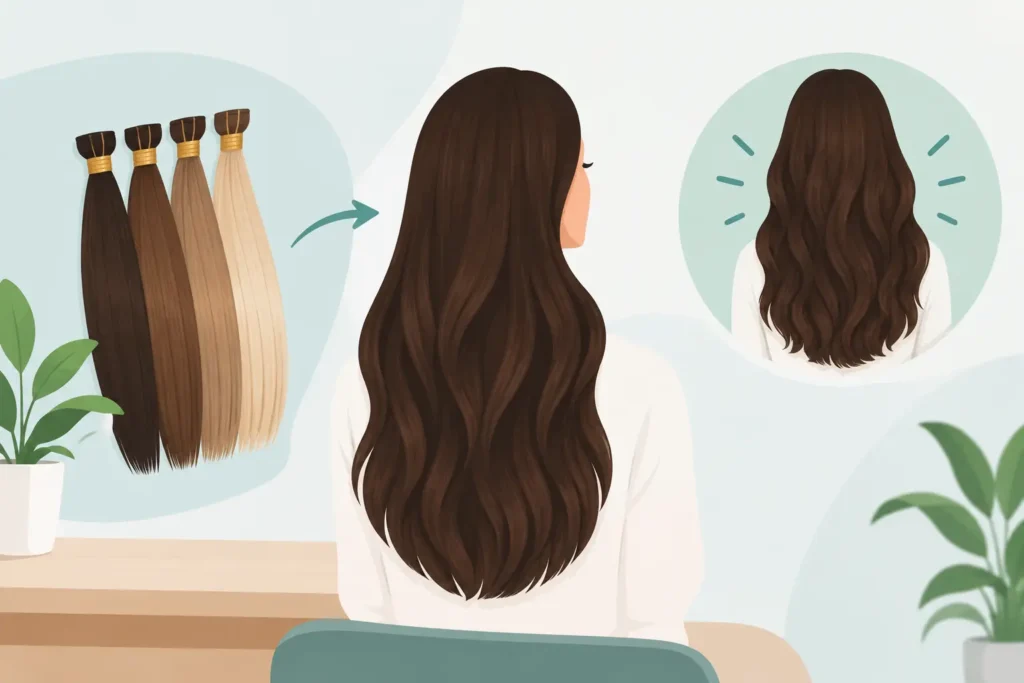
This matters particularly with light shades. Achieving a clean blonde or a refined dimensional tone may require professional color work. Responsible processing and cold-color techniques can preserve a better feel than aggressive treatment, but color-treated hair should never be presented as identical to untouched raw hair. Honest expectations are part of premium quality.
How to Tell Whether Extensions Are Heavily Coated
There is no reliable at-home test that can definitively identify silicone in a bundle. The better approach is to evaluate the supplier’s transparency and observe how the hair performs beyond its initial finish.
Start by asking direct questions before you buy. Does the supplier disclose whether silicone or other surface coatings are used? Is the hair raw, virgin, or color-treated? How is it sourced, sorted, and colored? Can they explain whether the hair is washed before installation and recommend a care routine that matches its actual processing level?
Then look at the hair itself. Extremely glass-like shine, a slippery residue on the hands, or a dramatic loss of softness after the first few washes may suggest a substantial cosmetic coating. These signs are not proof on their own. Humidity, mineral-heavy water, product buildup, heat tools, and incorrect shampoo can also affect extensions. Still, they are useful reasons to ask more questions rather than simply adding more product.
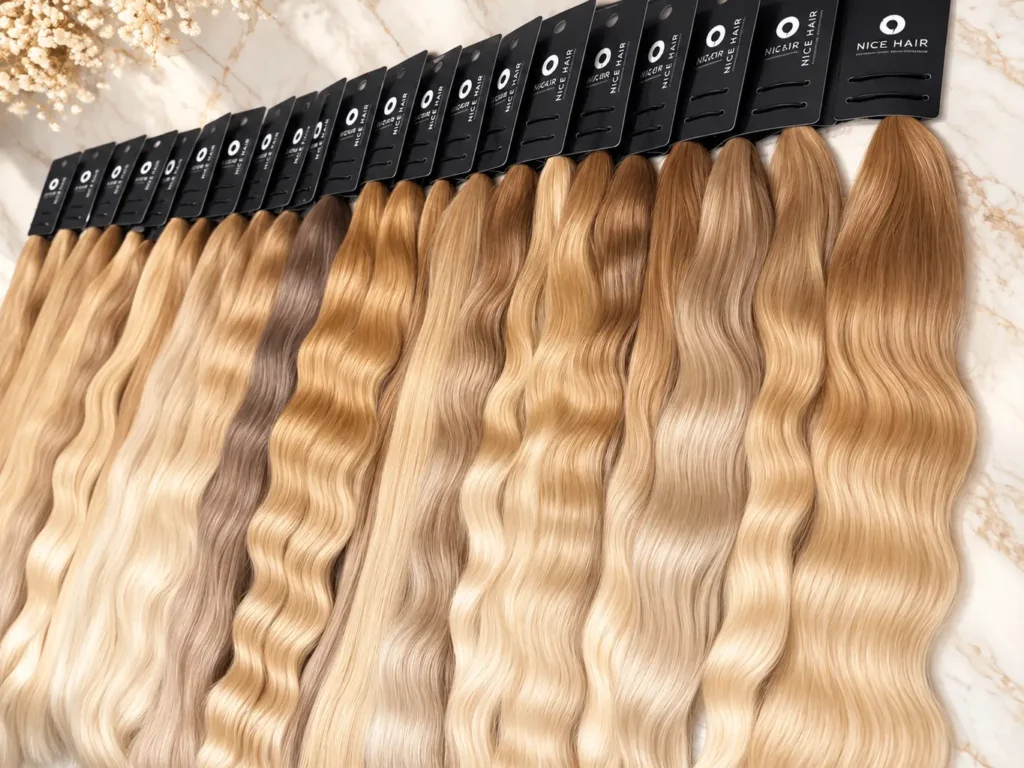
A supplier that controls its own production can usually provide clearer answers than one that only resells finished bundles. At NICEHAIR, traceability begins with ethically selected hair from Russia and CIS countries and continues through hand preparation, controlled cold-color work, and final quality checks. That level of oversight makes it possible to discuss a specific format, shade, and care plan with precision instead of relying on broad marketing language.
How to Identify Silicone-Free Hair Extensions Before Buying
Learning how to identify silicone-free hair extensions starts with asking about the manufacturing process rather than judging shine alone. Genuine Remy hair may still have silicone-based finishes, so cuticle alignment is not proof that a bundle is coating-free. Ask the supplier whether silicone treatments are used during production, how the hair is processed, and whether samples can be evaluated after several washes. Natural movement, consistent texture, and transparent product information provide a more useful assessment than an unusually silky first impression.
If you’re looking for silicone-free hair extensions, knowing how the hair is prepared matters more than relying on a label. NICE HAIR specializes in natural human hair without silicone coatings, offering a selection of lengths, shades, and textures directly from our production in Russia. If you’d like to explore available options, contact our international hair specialists on WhatsApp.
What to Ask Before You Buy Remy Hair
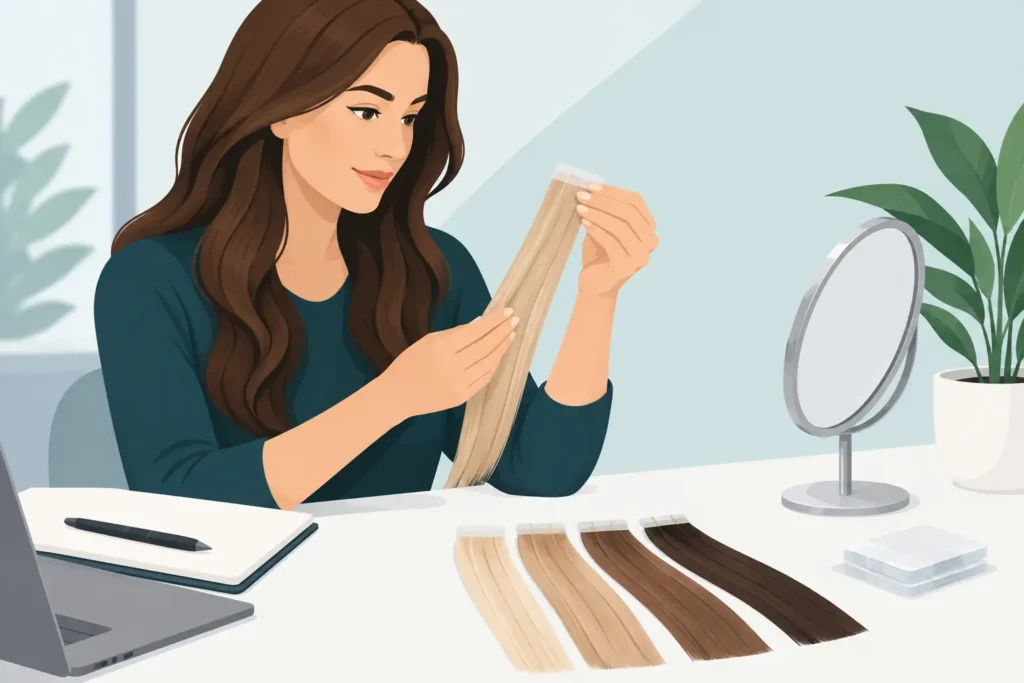
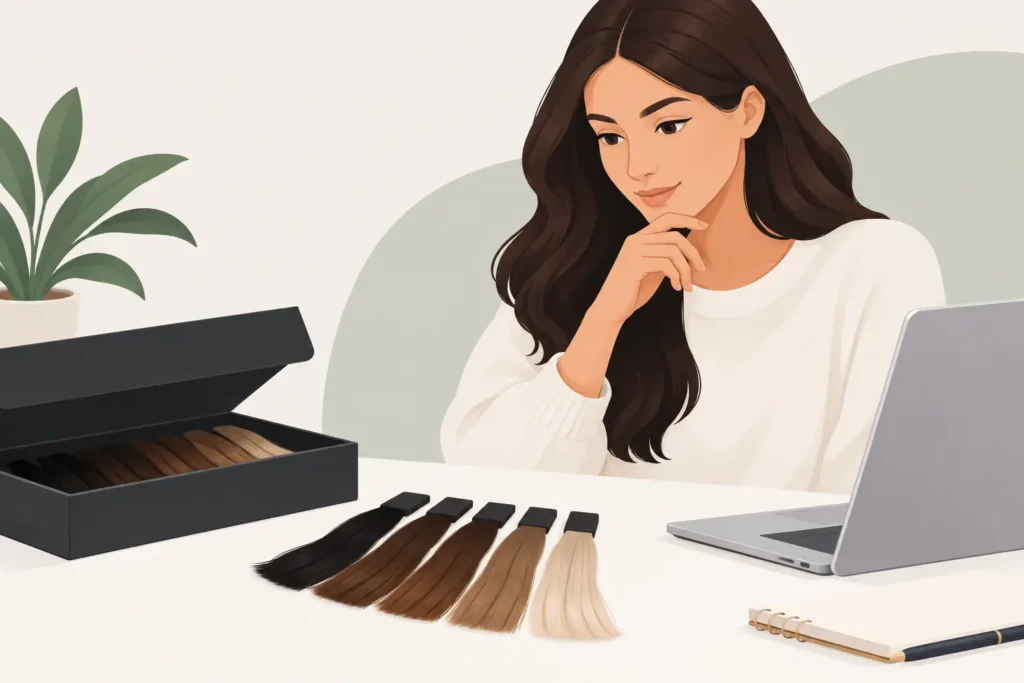
The right questions protect both your investment and the health of your natural hair. Ask whether cuticles remain aligned, whether the hair has been colored or otherwise processed, and whether silicone-based coatings are used. Request guidance on washing, heat styling, brushing, and the expected maintenance needs for your chosen extension method.
It is also wise to ask how consistently the supplier grades hair from batch to batch. This is especially relevant for stylists ordering wholesale hair or building a private-label collection. A sample that looks beautiful once is not enough. You need a standard that can be repeated in the next order, across lengths, textures, and shades.
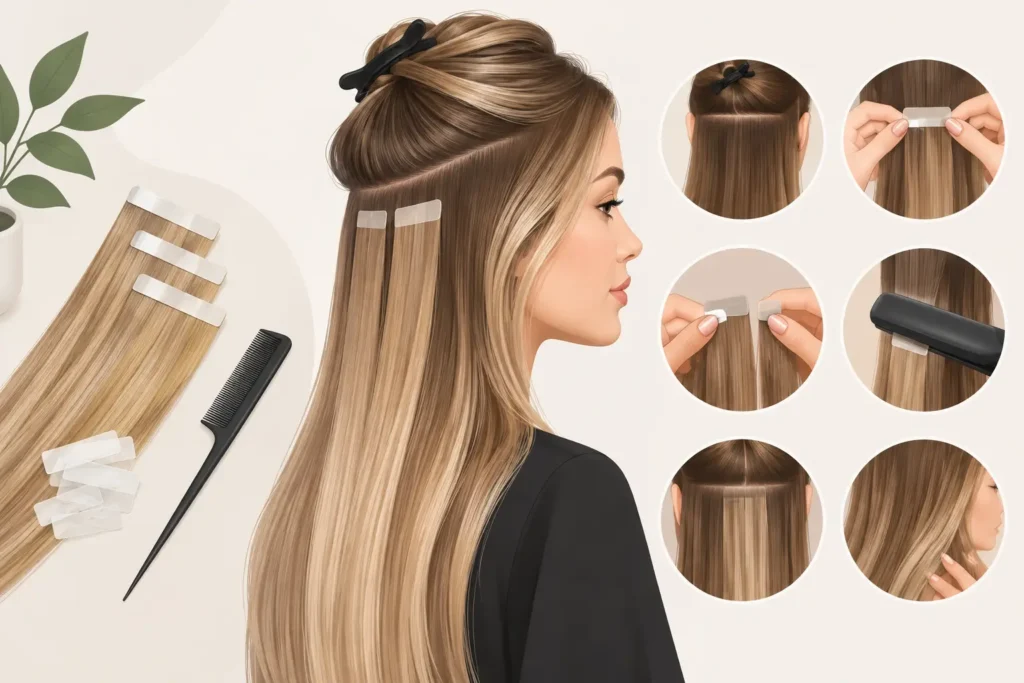
For a client choosing keratin bonds, tapes, wefts, or a ready-made piece, the most useful question may be simpler: “What hair format will look natural in my daily life?” Fine hair, an active routine, frequent heat styling, and a desire for maximum volume all influence the best choice. The hair should be selected together with the installation method, not as an afterthought.
Caring for Hair Without Relying on a Surface Coating
Whether your extensions are silicone-free or lightly finished, care determines how long they remain polished. Use a gentle, sulfate-free shampoo and concentrate conditioner on mid-lengths and ends, keeping rich products away from bonds or attachment areas. Brush gently from the ends upward with a suitable extension brush, and never sleep with wet hair.
Heat protection is nonnegotiable if you blow-dry, curl, or straighten your hair. Use moderate temperatures whenever possible. High heat can dehydrate any natural hair, including premium extensions with carefully preserved cuticles. A small amount of lightweight leave-in care can help with softness, but avoid layering multiple oils and serums until the hair feels coated or heavy.
If your extensions begin to tangle, do not assume silicone-free hair is the cause. Check for product buildup, brushing habits, water quality, friction from clothing, and whether the chosen texture matches your own hair. Persistent tangling should be discussed with the salon or supplier promptly, ideally with clear photos and details about your care routine.
The Better Standard Is Transparency
Silicone is not the only measure of hair quality, and “Remy” is not a guarantee of it. Premium hair should be judged by the full picture: aligned cuticles, credible origin, responsible processing, consistent sorting, skilled preparation, and realistic care guidance.
Choose extensions that allow you to see what you are buying clearly. When a supplier can explain how the hair was sourced, what was done to it, and how to maintain it, you can focus on the result that matters most: hair that feels like your own, not just on installation day, but throughout everyday wear.
For hair extension professionals, consistent quality is just as important as the first impression. NICE HAIR supplies natural human hair extensions from our own production in Russia, with worldwide shipping and a range of quality categories for different client needs. If you’re searching for a reliable hair supplier, request information about our hair collection and international orders on WhatsApp.
Frequently Asked Questions About Remy Hair and Silicone
Is all Remy hair silicone-free?
No, Remy hair is not automatically silicone-free. The term Remy describes human hair with cuticles aligned in the same direction, while silicone-free refers to the absence of silicone coatings. Some manufacturers apply silicone-based treatments to Remy hair to enhance shine and smoothness. Always check the supplier’s processing methods before purchasing.
How can you tell if hair extensions have silicone coating?
There is no reliable visual or at-home test that can definitively confirm whether hair extensions contain silicone. Excessive shine, an unusually slippery texture, or a noticeable change after several washes may raise questions about surface coatings, but these signs are not conclusive. The most reliable approach is to ask the manufacturer about the treatments used during production.
Are silicone-free hair extensions better quality?
Silicone-free hair extensions are not automatically higher quality, but they can make it easier to evaluate the hair’s natural condition without relying on a cosmetic coating. Hair quality also depends on cuticle alignment, sourcing, processing, and strand integrity. Well-selected natural human hair without silicone coatings can maintain softness and natural movement with appropriate care.
What is the difference between Remy and virgin hair?
Remy hair refers to human hair with cuticles maintained in a consistent direction from root to tip. Virgin hair refers to hair that has not been chemically colored, bleached, permed, or relaxed. Hair can be both Remy and virgin, but the terms describe different characteristics. Neither label alone guarantees that the extensions are silicone-free.
Where can you buy silicone-free Remy human hair extensions?
When choosing a supplier, look for transparent information about hair origin, cuticle alignment, processing, and the use of silicone coatings. NICE HAIR specializes in natural human hair without silicone coatings, offering different quality categories, lengths, shades, and textures from its production in Russia. For available options and worldwide shipping, contact our international sales manager on WhatsApp.
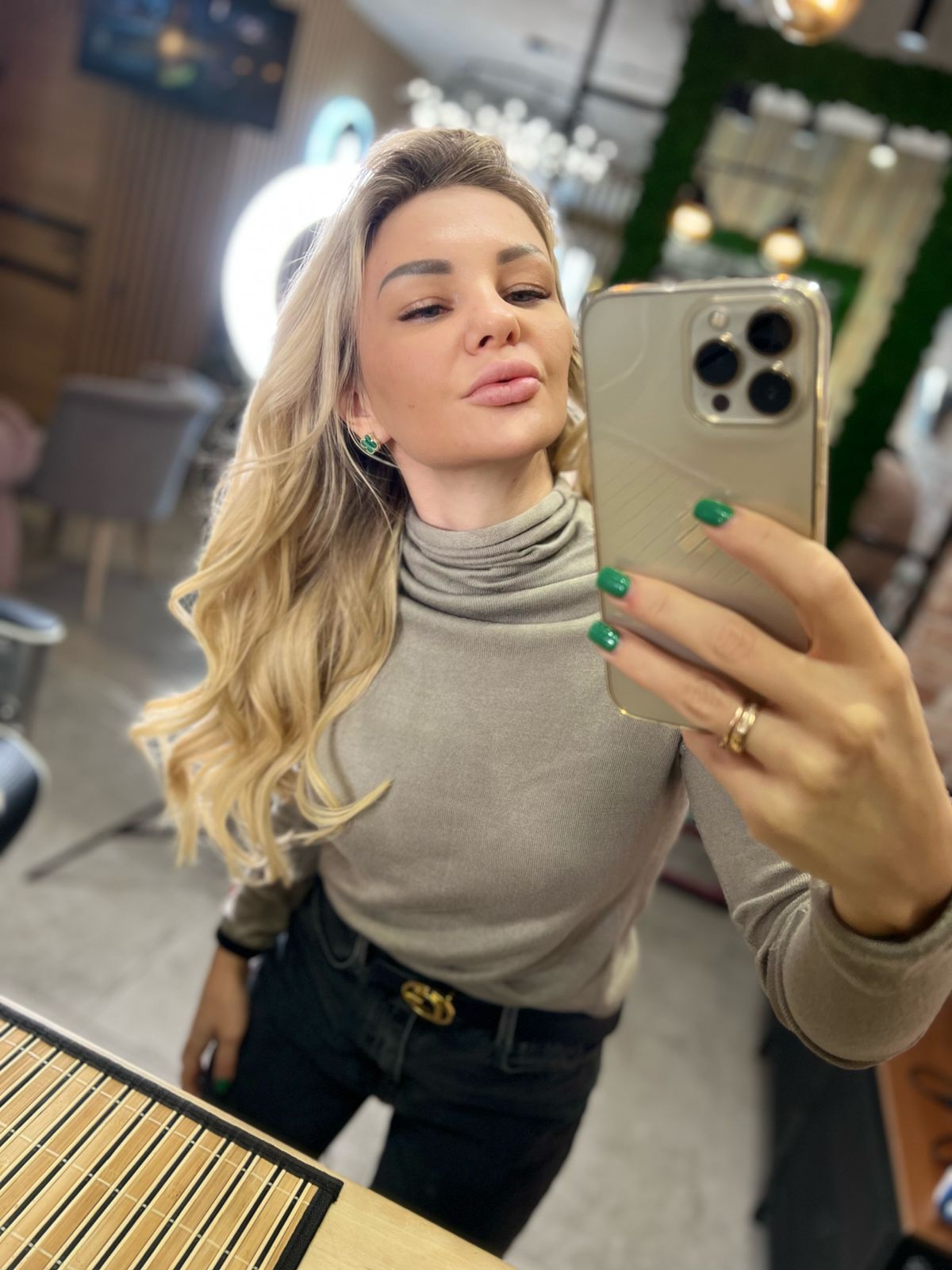
Certified hair extension stylists with 14+ years of experience. Own production of virgin Slavic hair, 10,000+ bundles in stock, salon in Dubai. Specialization: keratin extensions, ethical sourcing Russia & CIS, cold color technology.