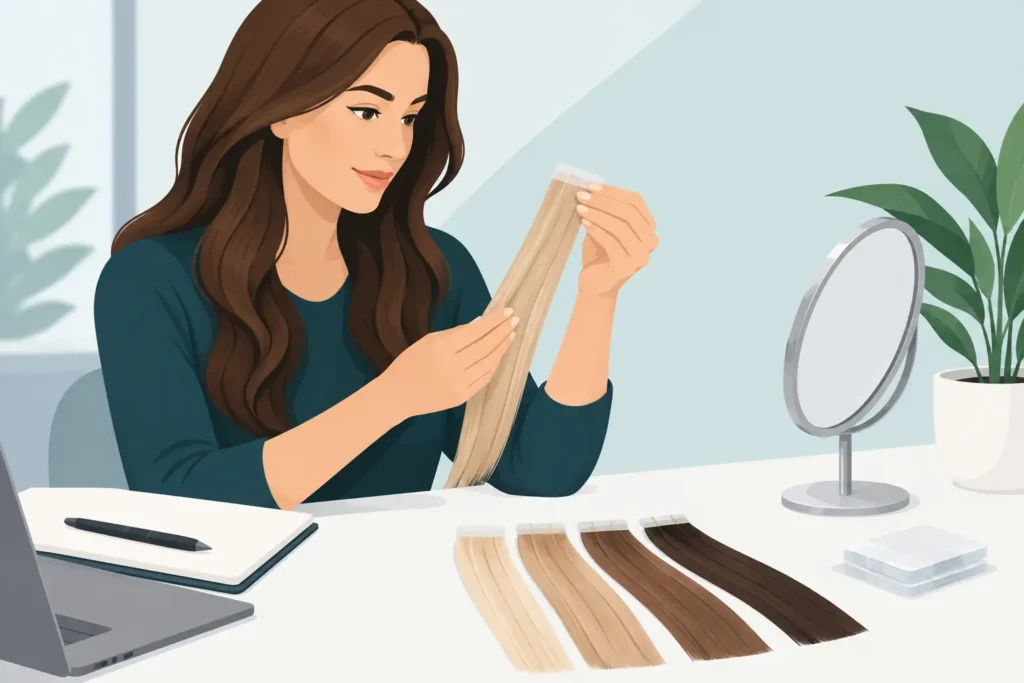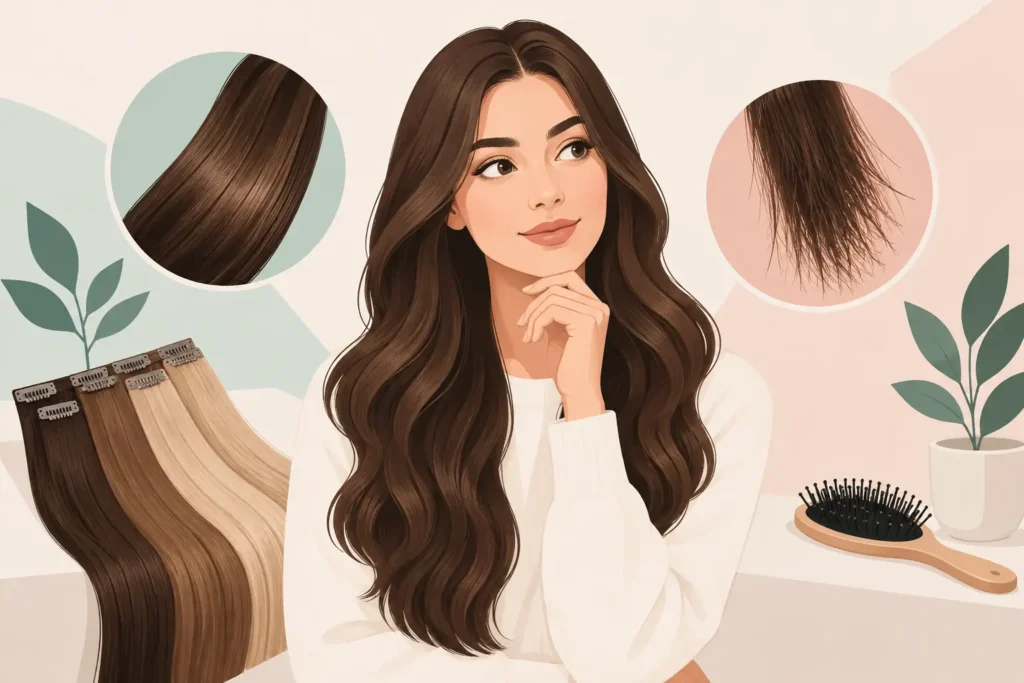
The right extensions should disappear into your own hair before anyone notices the added length or volume. If you are asking, “what color hair extensions should I get,” the answer is rarely as simple as choosing blonde, brunette, or black. A natural match comes from reading your roots, mids, ends, undertone, and the dimension created by your colorist.
For premium human hair extensions, shade selection is not an afterthought. It determines whether the result looks softly blended and expensive or visibly separate in daylight, photos, and movement. The goal is not to find a single flat color. It is to build a match that respects the complexity already present in your hair.
What Color Hair Extensions Should I Get for a Natural Result?
Start with the color through the middle and ends of your natural hair, not only the shade at the roots. Most people have some natural variation: roots may be deeper, ends may be lighter, and highlights may reflect warmer or cooler tones in different light. Extensions are worn through the lengths, so this area gives the most reliable reference.
If your hair is colored, think about its current condition rather than the color formula used at your last appointment. Toner fades, glosses soften, and sun exposure changes the visible result, especially in Dubai’s bright light. A shade that was perfect six weeks ago can look different today.
When choosing between two close shades, the best choice depends on your placement and styling. Slightly darker extensions often blend beautifully under a lighter surface layer. Slightly lighter lengths can work when they echo your ends or existing highlights. What usually looks less natural is a single extension shade that is noticeably warmer, cooler, lighter, or darker than every section of your hair.
Match Undertone Before You Match Depth
Depth describes how light or dark the hair is. Undertone describes the color that appears beneath it: warm gold, honey, copper, red, neutral beige, cool ash, or smoky brown. Two shades can look equally dark but still clash because one is golden and the other is ash-based.
Warm blonde hair usually needs extensions with honey, caramel, gold, or soft beige reflection. Cool blondes often need ash, pearl, or muted beige tones. For brunettes, the distinction may be subtle but matters just as much. A rich chocolate brown may carry warmth, while an espresso or mushroom brown may have a cooler, more neutral cast.
Avoid choosing an ash shade simply because it looks refined on a swatch. If your natural hair has warmth, ash extensions can read gray beside it. The opposite is also true: golden extensions may appear brassy against cool, toned blonde hair. In professional matching, the eye looks for harmony, not just a number on a color ring.
Check Your Hair in Honest Light
Bathroom lighting is forgiving. Daylight near a window is more revealing, while direct midday sun can exaggerate warmth and contrast. For an online consultation, send clear photos taken in indirect natural daylight with no filters, flash, beauty mode, or heavy editing.
Photograph your hair down from the back and sides, with the roots and lengths visible. Include a close-up of the mid-lengths and ends. This helps a specialist see the real color transition and select a blend rather than guessing from one front-facing photo.
Your Roots Do Not Have to Match the Extensions Exactly
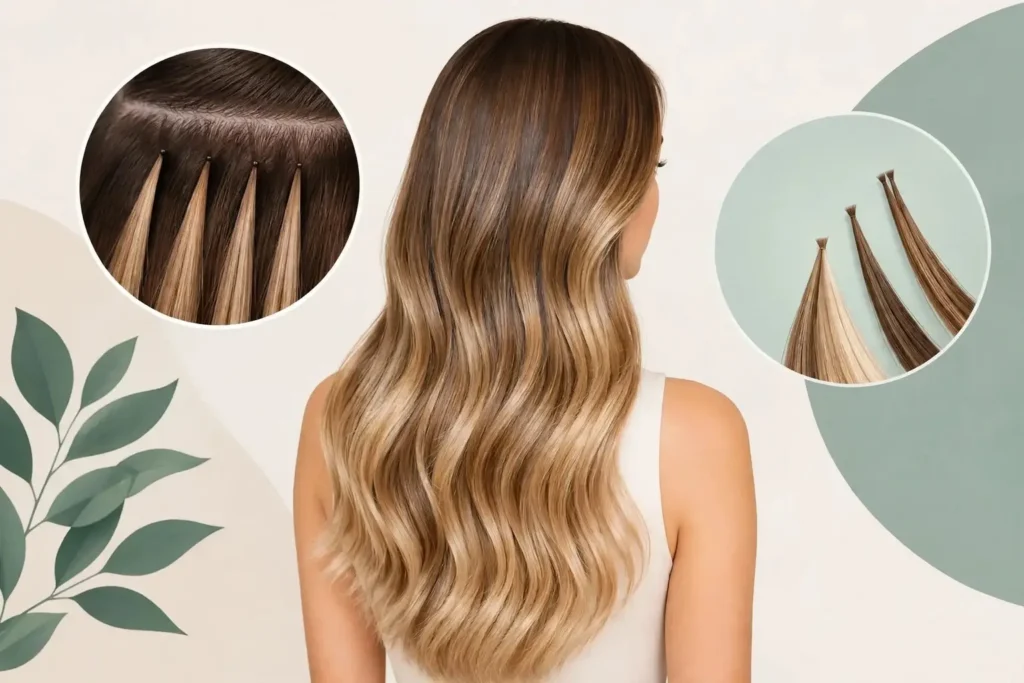
A darker root is normal and often makes extensions look more believable. The key is that the transition through the lengths feels intentional. If your hair has a lived-in root, balayage, root shadow, or natural regrowth, extensions can be placed beneath the top layer and blended with more than one tone.
For example, a beige blonde with a soft dark root may need a deeper neutral shade near the nape and a brighter beige or highlighted blend through the visible lengths. A brunette with caramel ribbons may need a rich base shade plus a small amount of caramel dimension. This approach recreates the visual movement of real hair.
A single-color installation can be right for virgin, uncolored hair with an even tone, or for clients who prefer a clean, dense color statement. But when natural hair is multi-dimensional, a custom mix is often the more discreet option.
Highlights, Balayage, and Money Pieces Need a Plan
Extensions can support highlighted hair without creating stripes, but placement matters. The brightest pieces around the face should be treated carefully. If all extensions are light, they can make the hair look overly solid and remove the depth that makes a balayage feel soft.
Instead, retain depth underneath and introduce lighter shades strategically. The amount of light hair needed depends on how visible your highlights are, how you part your hair, and whether you wear it straight, waved, or curled. Waves reveal more internal dimension, while sleek straight styling makes contrast easier to see.
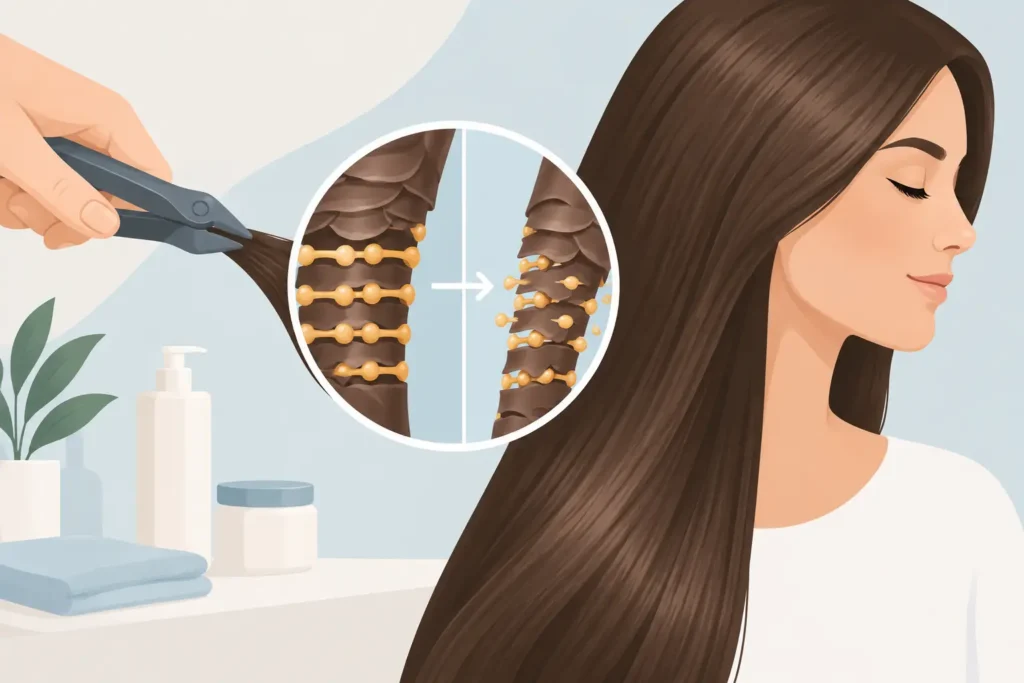
For very bright blondes, the challenge is often not the blonde itself but avoiding yellow, gray, or opaque-looking lengths. High-quality virgin hair with controlled cold-color processing gives a cleaner starting point for refining the tone. Still, extensions should not be treated as a substitute for a color plan. If your own hair is about to be significantly lightened or darkened, color it first and match extensions afterward.
Consider Texture Along With Color
Color appears differently on different textures. Straight hair reflects light evenly, so even a small shade difference can be visible. Wavy hair scatters light and may tolerate a more dimensional blend. Curly hair has its own light pattern and requires matching both curl behavior and color depth through the curl.
This is one reason a swatch can look different once installed. The same blonde may appear brighter in sleek extensions and softer in textured hair. Length also changes perception: a shade that blends at shoulder length may look lighter once it reaches the waist because there is more surface area catching the light.
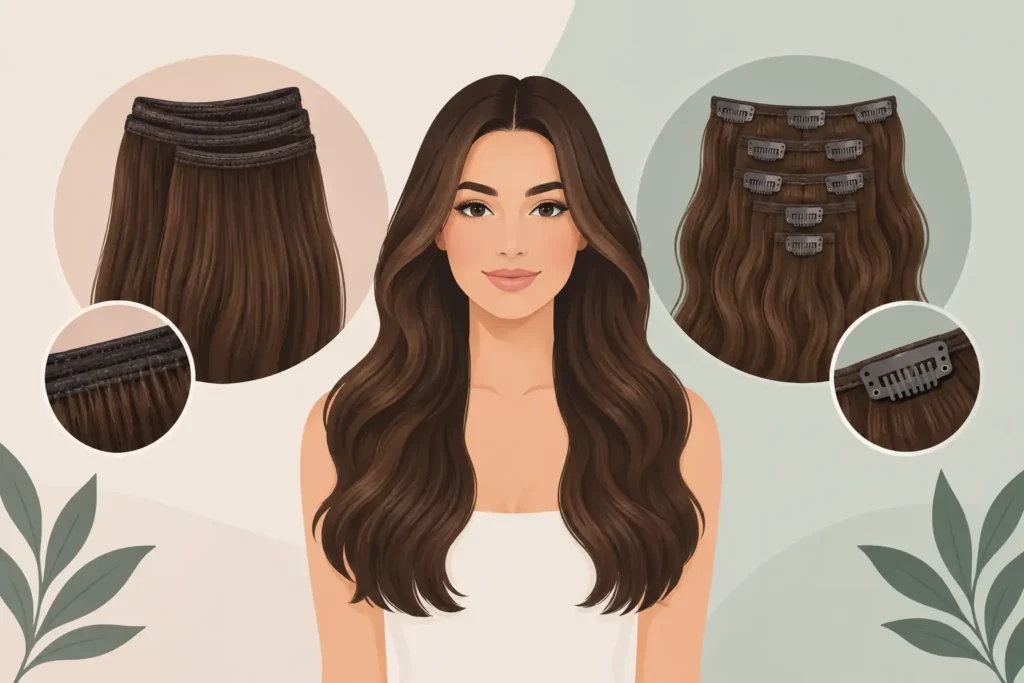
A professional consultation should assess the full picture: your hair texture, density, current color, desired length, lifestyle, and installation method. Keratin bond extensions, for example, allow detailed shade placement because individual strands can be distributed precisely where depth or brightness is needed.
When a Custom Blend Is Better Than One Shade
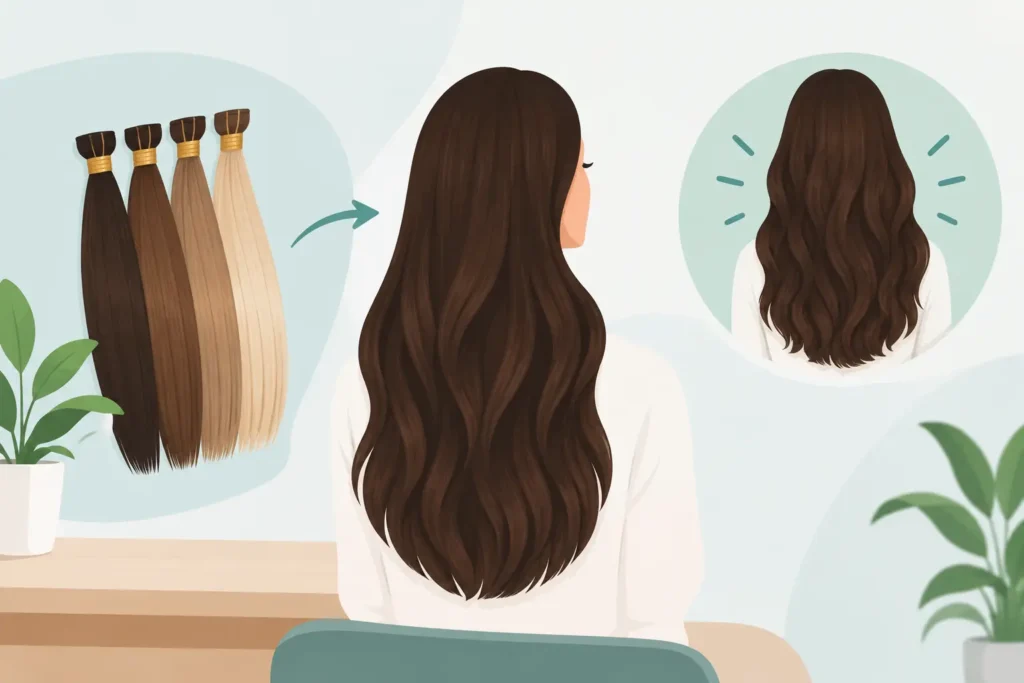
A custom blend is especially useful if your hair has balayage, highlighted ribbons, a shadow root, faded color, or naturally uneven tones. It is also valuable when you want significant length without creating a block of color below your natural hair.
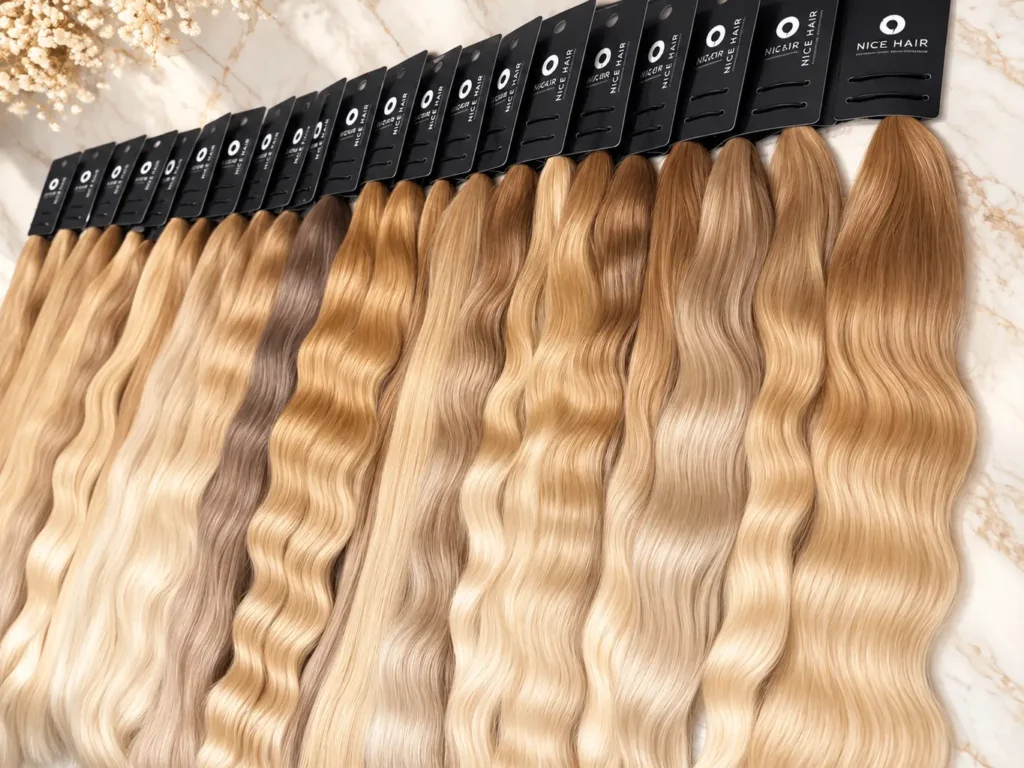
At NICEHAIR, shade selection is approached as part of the installation design, not as a separate product choice. With more than 10,000 hair cuts in stock and 13 extension formats, the focus can remain on selecting the right combination for your hair rather than forcing a close-enough match.
A blend does not always mean many colors. Sometimes two carefully chosen shades are enough: one that supports the base and one that echoes the lightest visible pieces. More shades can create a beautiful result, but only when they serve the existing color pattern. Random variation can look messy rather than natural.
Should You Go Lighter or Darker Than Your Natural Hair?
If you want a subtle, low-maintenance result, stay close to your current hair color. Extensions can add length and fullness without changing your overall look, which is often the most luxurious effect.
Going lighter is possible, but it works best when lighter tones already exist in your hair or when you plan a coordinated color appointment. Hair extensions will not lighten your natural hair around the face, crown, or part line, so a dramatic light extension shade can create a clear divide.
Going darker can add richness and visual density, particularly for blondes moving toward a bronde look or brunettes wanting more depth. The trade-off is that dark extensions can make faded or porous natural ends appear lighter by comparison. A gloss or toner before installation may be the simplest way to bring everything into harmony.
Avoid These Common Shade-Matching Mistakes
Do not match extensions to a heavily filtered selfie, a hair photo taken under colored salon lights, or the memory of a shade you wore months ago. Hair changes with washing, heat styling, mineral exposure, sun, and toner fade.
Do not choose based only on the color name. “Ash blonde,” “chocolate brown,” and “caramel” are not universal standards. One supplier’s neutral beige may be another supplier’s warm blonde. A visual consultation, professional color ring, or clear daylight photo is more useful than a label.
Finally, do not wait until after a major color correction to think about extensions. If you are changing from dark brown to blonde, correcting banding, or refreshing old highlights, complete the hair color plan first. Matching extensions to hair that is still in transition often creates unnecessary adjustments later.
The most flattering shade is the one that looks like it has always belonged to you. Bring clear daylight photos, be honest about upcoming color changes, and let your natural roots, dimension, and texture guide the choice. A careful match creates the kind of result that feels polished in the salon and still looks effortless when you are simply living your life.
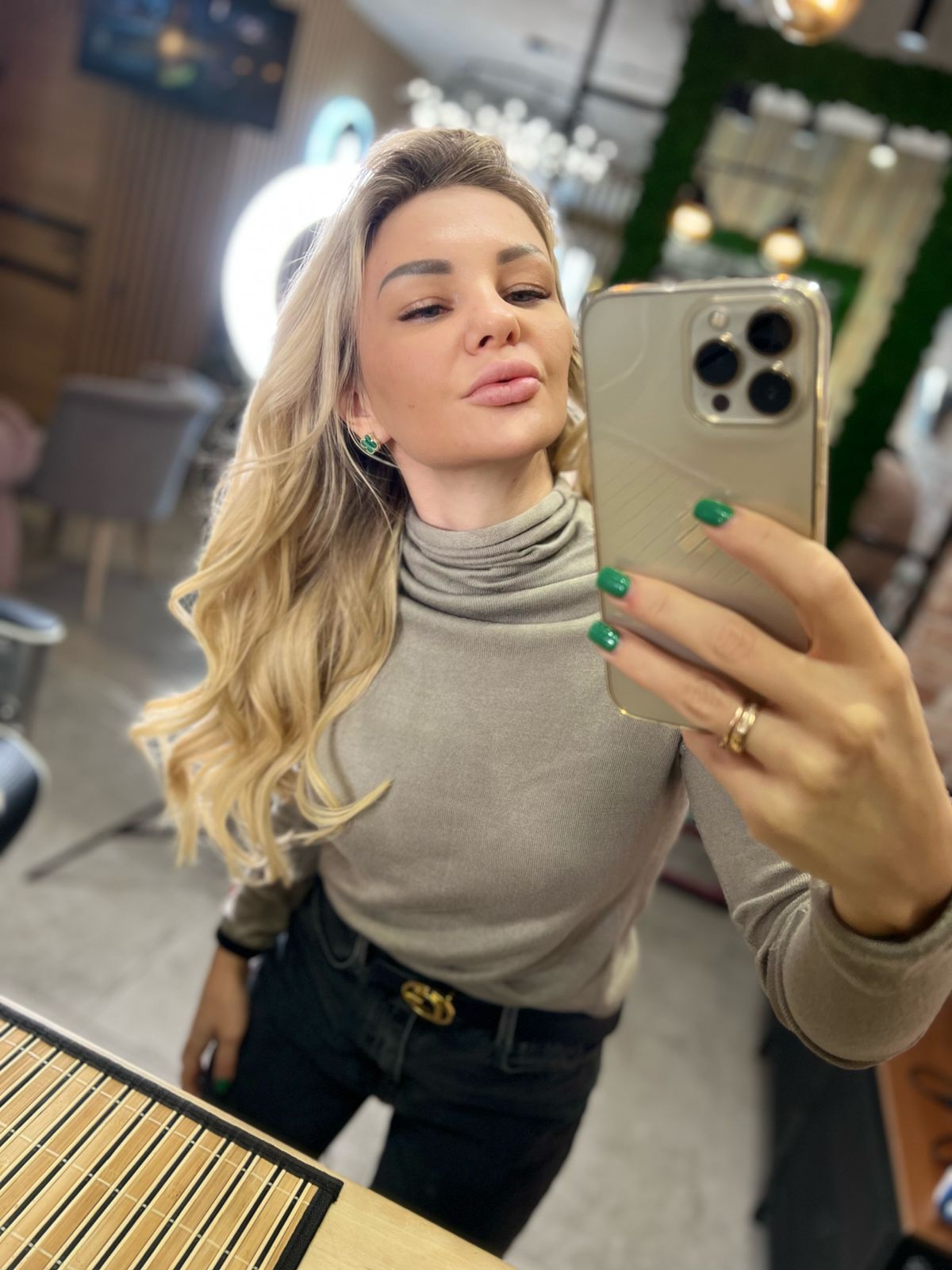
Certified hair extension stylists with 14+ years of experience. Own production of virgin Slavic hair, 10,000+ bundles in stock, salon in Dubai. Specialization: keratin extensions, ethical sourcing Russia & CIS, cold color technology.